Drainage Solutions in Dallas–Fort Worth

Professional drainage systems - from French drains and catch basins to full regrading and stormwater management.

Texas weather makes outdoor living a year-round possibility, and a well-designed outdoor space can dramatically expand your home's usable square footage. We design and build complete outdoor environments — from cooking and dining areas to lounging spaces with fire features — that become the center of family life and entertaining.

Texas weather makes outdoor living a year-round possibility, and a well-designed outdoor space can dramatically expand your home's usable square footage. We design and build complete outdoor environments — from cooking and dining areas to lounging spaces with fire features — that become the center of family life and entertaining.

Why Drainage Is a Serious Issue in DFW

North Texas sits on expansive clay soil that absorbs water slowly and holds it for a long time. When it rains, water doesn't percolate down the way it does in sandier regions — it pools on the surface, saturates beds, and flows toward whatever low point it can find. In many cases, that low point is your foundation, your driveway, or your neighbor's property.
Poor drainage doesn't just kill turf and plantings. Over time, it leads to foundation movement, retaining wall failure, erosion along fence lines, and standing water that breeds mosquitoes and creates liability issues. The clay soil also expands and contracts dramatically with moisture changes, which puts additional stress on structures and hardscape. Addressing drainage early is one of the most cost-effective things a homeowner in Dallas–Fort Worth can do to protect their property long-term.

What Drainage Systems Do We Install?

French Drains — A perforated pipe set in a gravel-filled trench that collects subsurface water and redirects it to a designated discharge point. French drains are one of the most effective solutions for saturated beds, soggy side yards, and areas where water lingers after rain. We install them with proper slope, filter fabric, and clean gravel to prevent clogging and ensure long-term performance.

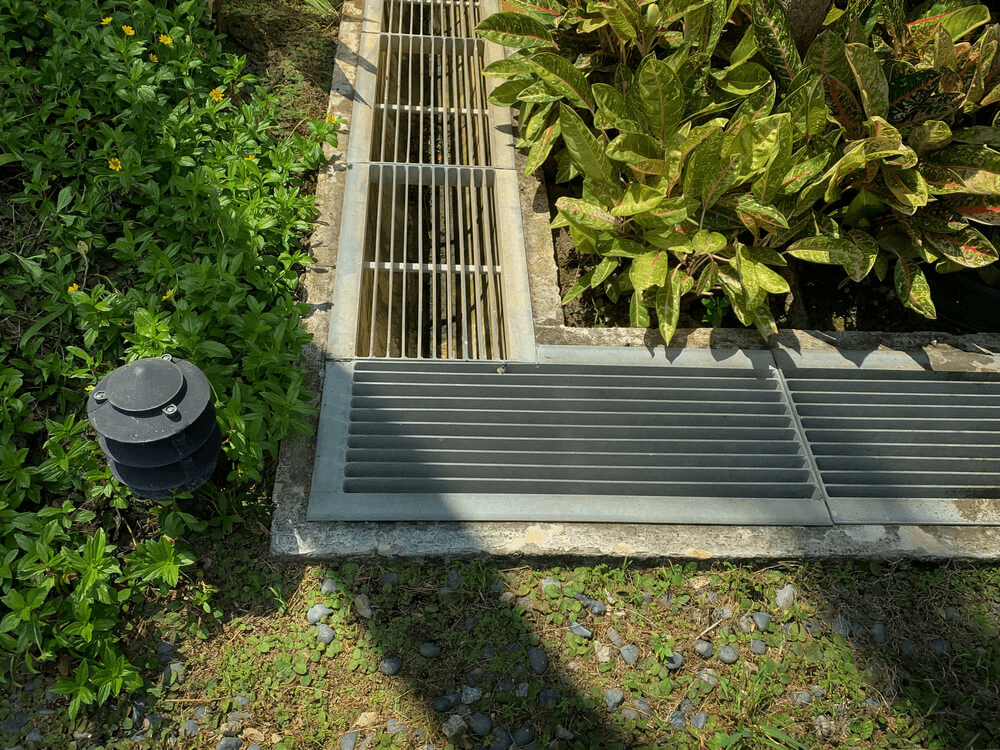
Channel Drains — Surface-level drains set into concrete, pavers, or at the base of driveways and patios to intercept sheet water before it reaches areas where it causes damage. These are common along garage entries, pool decks, and walkways where water runs across a hard surface and needs to be caught quickly.

Catch Basins & Area Drains — Installed at low points in the yard where water naturally collects. These connect to underground piping that carries water to the street, alley, or a pop-up emitter in a safe discharge area. We size and position these based on the volume of water your property deals with during heavy rain events.

Downspout Extensions & Tie-Ins — Roof runoff is one of the biggest contributors to drainage problems in DFW. We extend and redirect downspouts underground so the water is carried away from the foundation and released at a safe distance. This is one of the simplest and most impactful fixes for foundation-related water issues.

Surface Grading & Swales — Sometimes the problem isn't a missing drain — it's the slope of the yard itself. We regrade sections of the property to create positive drainage away from structures, and build shallow swales where needed to guide water naturally across the landscape without visible infrastructure.

Dry Creek Beds — For properties where water volume is high and a natural aesthetic is preferred, we construct dry creek beds using graded stone and boulders that function as both a drainage channel and a landscape feature. These handle surface water effectively while blending into the overall landscape.

Sump Pump Systems — For low-lying areas or properties where gravity drainage isn't possible, we install sump pump systems that actively move water from collection points to an appropriate discharge location. These are common in below-grade patios, courtyards, and properties with limited slope.

How Do You Diagnose a Drainage Problem?

We start with a site visit to evaluate how water moves across your property. That includes checking the grade around your foundation, identifying low spots in the yard, looking at where downspouts discharge, and reviewing the condition of any existing drainage infrastructure. In some cases we'll also check during or right after rain to see the problem in real time. Once we understand the full picture, we recommend the right combination of solutions — not just a single fix in one spot that pushes the problem somewhere else.

Can Drainage Be Installed Without Tearing Up My Whole Yard?

In most cases, yes. Many drainage solutions — French drains, downspout tie-ins, catch basins — require trenching, but we plan routes carefully to minimize disruption to existing turf, beds, and hardscape. After installation, we restore disturbed areas with sod, soil, and mulch so the work blends back into your landscape. For properties with established landscaping, we take extra care to protect root zones and existing plantings during construction.

What Happens If I Ignore a Drainage Problem?

It gets worse. Water doesn't fix itself — it follows the path of least resistance, and over time that path gets deeper and more destructive. Saturated soil around a foundation can lead to costly structural repairs. Standing water in beds kills root systems and invites fungal disease. Erosion along fence lines undermines posts and footings. And in DFW's clay soil, the constant cycle of expansion and contraction from unmanaged moisture accelerates all of these problems. The sooner a drainage issue is addressed, the less damage it causes and the less it costs to fix.

Do I Need a Permit for Drainage Work?

It depends on the scope and your municipality. Most residential drainage installations in Dallas–Fort Worth don't require a permit, but projects that involve tying into the city storm sewer, altering easements, or significant regrading near property lines may need one. We handle permit research and coordination as part of the project so you don't have to chase it down yourself.

What Areas Do You Serve?

We serve Dallas, Fort Worth, Plano, Frisco, University Park, Highland Park, Southlake, McKinney, Allen, and surrounding communities across the DFW metroplex.

Why Choose Outdoor Concepts for Drainage?

We see drainage as foundational — not an afterthought. Every landscape we install accounts for where water goes, but we also take on standalone drainage projects for properties that need correction. We diagnose the full picture before recommending solutions, and we build systems that handle real DFW storm events — not just light rain. One team manages the job from assessment to backfill, so nothing gets missed and your property is left clean.

Why Drainage Is a Serious Issue in DFW

North Texas sits on expansive clay soil that absorbs water slowly and holds it for a long time. When it rains, water doesn't percolate down the way it does in sandier regions — it pools on the surface, saturates beds, and flows toward whatever low point it can find. In many cases, that low point is your foundation, your driveway, or your neighbor's property.

Poor drainage doesn't just kill turf and plantings. Over time, it leads to foundation movement, retaining wall failure, erosion along fence lines, and standing water that breeds mosquitoes and creates liability issues. The clay soil also expands and contracts dramatically with moisture changes, which puts additional stress on structures and hardscape. Addressing drainage early is one of the most cost-effective things a homeowner in Dallas–Fort Worth can do to protect their property long-term.

What Drainage Systems Do We Install?

French Drains — A perforated pipe set in a gravel-filled trench that collects subsurface water and redirects it to a designated discharge point. French drains are one of the most effective solutions for saturated beds, soggy side yards, and areas where water lingers after rain. We install them with proper slope, filter fabric, and clean gravel to prevent clogging and ensure long-term performance.

Channel Drains — Surface-level drains set into concrete, pavers, or at the base of driveways and patios to intercept sheet water before it reaches areas where it causes damage. These are common along garage entries, pool decks, and walkways where water runs across a hard surface and needs to be caught quickly.

Catch Basins & Area Drains — Installed at low points in the yard where water naturally collects. These connect to underground piping that carries water to the street, alley, or a pop-up emitter in a safe discharge area. We size and position these based on the volume of water your property deals with during heavy rain events.

Downspout Extensions & Tie-Ins — Roof runoff is one of the biggest contributors to drainage problems in DFW. We extend and redirect downspouts underground so the water is carried away from the foundation and released at a safe distance. This is one of the simplest and most impactful fixes for foundation-related water issues.

Surface Grading & Swales — Sometimes the problem isn't a missing drain — it's the slope of the yard itself. We regrade sections of the property to create positive drainage away from structures, and build shallow swales where needed to guide water naturally across the landscape without visible infrastructure.

Dry Creek Beds — For properties where water volume is high and a natural aesthetic is preferred, we construct dry creek beds using graded stone and boulders that function as both a drainage channel and a landscape feature. These handle surface water effectively while blending into the overall landscape.

Sump Pump Systems — For low-lying areas or properties where gravity drainage isn't possible, we install sump pump systems that actively move water from collection points to an appropriate discharge location. These are common in below-grade patios, courtyards, and properties with limited slope.

How Do You Diagnose a Drainage Problem?

We start with a site visit to evaluate how water moves across your property. That includes checking the grade around your foundation, identifying low spots in the yard, looking at where downspouts discharge, and reviewing the condition of any existing drainage infrastructure. In some cases we'll also check during or right after rain to see the problem in real time. Once we understand the full picture, we recommend the right combination of solutions — not just a single fix in one spot that pushes the problem somewhere else.

Can Drainage Be Installed Without Tearing Up My Whole Yard?

In most cases, yes. Many drainage solutions — French drains, downspout tie-ins, catch basins — require trenching, but we plan routes carefully to minimize disruption to existing turf, beds, and hardscape. After installation, we restore disturbed areas with sod, soil, and mulch so the work blends back into your landscape. For properties with established landscaping, we take extra care to protect root zones and existing plantings during construction.

What Happens If I Ignore a Drainage Problem?

It gets worse. Water doesn't fix itself — it follows the path of least resistance, and over time that path gets deeper and more destructive. Saturated soil around a foundation can lead to costly structural repairs. Standing water in beds kills root systems and invites fungal disease. Erosion along fence lines undermines posts and footings. And in DFW's clay soil, the constant cycle of expansion and contraction from unmanaged moisture accelerates all of these problems. The sooner a drainage issue is addressed, the less damage it causes and the less it costs to fix.

Do I Need a Permit for Drainage Work?

It depends on the scope and your municipality. Most residential drainage installations in Dallas–Fort Worth don't require a permit, but projects that involve tying into the city storm sewer, altering easements, or significant regrading near property lines may need one. We handle permit research and coordination as part of the project so you don't have to chase it down yourself.

What Areas Do You Serve?

We serve Dallas, Fort Worth, Plano, Frisco, University Park, Highland Park, Southlake, McKinney, Allen, and surrounding communities across the DFW metroplex.

Why Choose Outdoor Concepts for Drainage?

We see drainage as foundational — not an afterthought. Every landscape we install accounts for where water goes, but we also take on standalone drainage projects for properties that need correction. We diagnose the full picture before recommending solutions, and we build systems that handle real DFW storm events — not just light rain. One team manages the job from assessment to backfill, so nothing gets missed and your property is left clean.

Visuals of our services

Samples