Sod Installation in DFW: What Actually Takes Root in Texas Heat
Articles
5 Min Read
New sod in DFW lives or dies in the prep. The right grass, the right season, and the grading and drainage underneath — here's what actually takes root.

More Articles

Ready to have a flawless yard?
Book a consultation
Call/Text
Plenty of North Texas homeowners have watched a fresh lawn go from green to gone in a single season. The sod looked flawless the week it went down, then thinned, yellowed, and lifted in dry sheets by August. The grass rarely deserves the blame. Most failed sod installation in the Dallas-Fort Worth area traces back to what happened before the first roll was laid — the grading, the drainage, and the soil prep underneath. Sod is the easy part. The metroplex sits on some of the most demanding soil in the state for growing grass, and a lawn that lasts is built from the ground down, not the green up.
To talk through what your yard needs before a single pallet arrives, request a consultation or call (214) 814-1081. The guide below covers which grass actually holds up here, when to lay it, and the prep that decides whether new sod roots or wilts.
Why Does New Sod Fail in North Texas?
Most of the Dallas-Fort Worth metroplex sits on Blackland Prairie soil — a heavy, expansive clay that holds water at the surface and swells and shrinks measurably as it takes on and loses moisture. That single fact shapes everything about growing grass here. Sod laid directly onto unmodified clay tends to sit in poorly draining soil, where roots stay shallow and water pools after every storm. As the clay cycles between wet and dry, the grade shifts, low spots form, and the lawn develops the uneven, patchy look that has homeowners replacing sod they only put down a year earlier.
The pattern shows up most often on newer homes, where a builder-grade install often lays sod over compacted construction soil with little grading and no drainage plan, and the lawn struggles the moment a real Texas summer arrives. The fix is not better grass — it is the work below it: correcting the grade so water runs away from the foundation, addressing drainage on a clay lot, and preparing the soil bed. We cover the water side of that problem in our guide to what actually fixes yard flooding in DFW, and the same principle governs a healthy lawn.
Which Sod Holds Up Best in the DFW Heat?
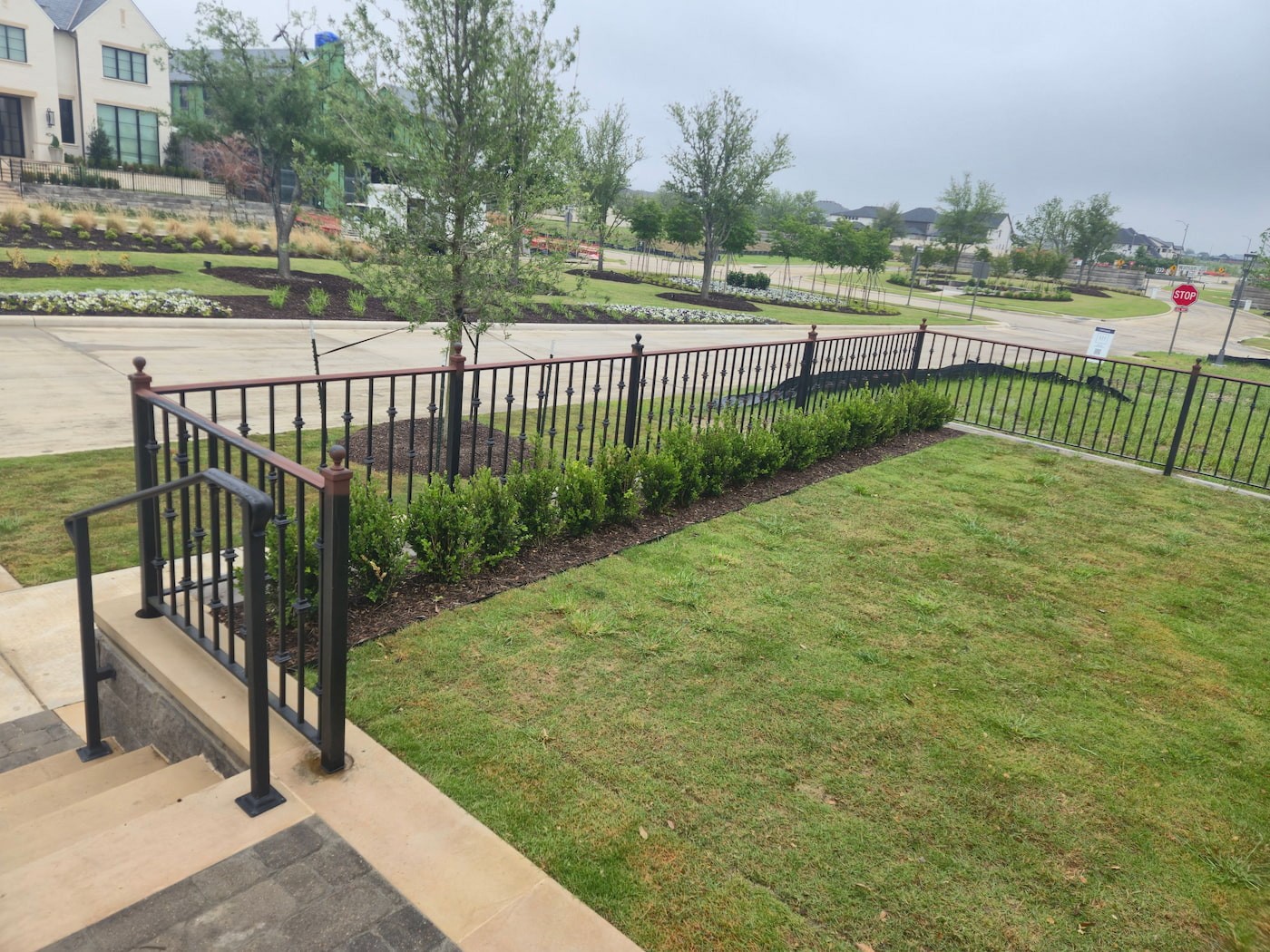
Three warm-season grasses dominate North Texas lawns because they tolerate heat, handle drought, and perform in local soil. The right one for your yard depends mostly on how much direct sun it gets and how the lawn will be used.
Bermuda
Bermuda is the workhorse of full-sun DFW lawns. It is highly heat- and drought-tolerant, tough underfoot, and repairs itself quickly, which makes it well suited to high-traffic yards and homes with children or pets. It does want sun — roughly eight or more hours of direct light a day — and tends to thin out in shade. Modern cultivars such as TifTuf and Tifway 419 are common choices for North Texas because they hold up through the worst of the summer heat.
Zoysia
Zoysia is one of the most balanced options for the region. It forms a dense, uniform lawn with a fine-to-medium blade, tolerates a wider range of conditions than Bermuda, and handles some light shade. Palisades Zoysia is a popular North Texas pick, with a drought tolerance that rivals Bermuda once it is established. It is a strong fit for homeowners who want a thick, even lawn with less long-term input.
St. Augustine
St. Augustine is the best performer in shaded yards, where Bermuda would struggle, and gives a lush, broad-bladed look many homeowners prefer. The trade-off is water: it is the thirstiest of the three and needs a well-calibrated irrigation system to get through the peak of a Dallas summer without wilting. In a shaded lot with reliable irrigation it shines; in full sun with limited watering it is the harder grass to keep.
Bermuda, Zoysia, or St. Augustine: A Quick Comparison
Bermuda — Best for full sun (eight or more hours) and high-traffic yards. Excellent heat and drought tolerance and quick to repair itself, but needs the most sun and the most frequent mowing. Common North Texas cultivars: TifTuf, Tifway 419, Celebration.
Zoysia — The best all-around pick for mixed sun and lower upkeep. Dense and uniform with strong drought tolerance once established, and it handles light shade; it is slower to fill in than Bermuda. Common North Texas cultivars: Palisades, Zeon, Emerald.
St. Augustine — Best for shaded yards. Lush and broad-bladed, but the thirstiest and least traffic-tolerant of the three, so it depends on reliable irrigation. Common North Texas cultivars: Raleigh, Palmetto.
What Goes Into a Sod Installation That Lasts?

The visible part of a sod install — unrolling and tucking the turf — takes a fraction of the time. The work that determines whether the lawn is still thriving in five years happens before the grass arrives. These are the steps that matter most on a North Texas lot.
1. Site Grading and Soil Prep
A lasting lawn starts with the grade. The old surface is cleared, and the ground is shaped so water drains away from the home rather than pooling against the foundation or collecting in low spots. On compacted or construction-grade soil, the bed is loosened and amended so roots have something to grow into instead of a hardpan of clay. Getting the grade right is also a moisture-management decision on expansive soil, which is why grading and dirt work is the foundation of the whole install — and why a lawn laid on a corrected grade behaves so differently from one dropped onto whatever the builder left behind.
2. Drainage
Because Blackland clay holds water, drainage is planned into a lawn on a problem lot rather than added after the fact. Where water consistently pools or runs toward the house, a drainage solution moves it away before the sod goes down, so the new roots are not left sitting in saturated soil. On many properties this work runs alongside the grading as a single below-surface stage, and our drainage installation work is frequently part of a sod or full-yard project for exactly that reason.
3. Irrigation Check
New sod has a narrow, demanding window in its first couple of weeks, and the irrigation system has to be ready to meet it before the pallets arrive. A pre-install check confirms coverage is even, heads are not blocked or broken, and the whole yard is reachable — gaps in coverage show up fast as brown patches in establishing sod. For yards without a system, or with one that no longer covers the layout, irrigation work is best handled before installation, not after the lawn is already stressed.
4. Laying and Rolling the Sod
With the bed prepared, the sod is laid in a tight, staggered pattern with seams pressed close so the lawn knits together without gaps. It is then rolled to press the roots into firm contact with the soil bed, which is what lets them take hold. Done well, the seams disappear within a few weeks as the grass fills in. Done over a poor bed, even perfectly laid sod will telegraph every low spot and gap underneath it.
When Is the Best Time to Lay Sod in DFW?
Timing gives new sod a real head start. The most forgiving windows in North Texas are April through mid-May and September through mid-October, and many local professionals consider early fall the best time of all. Laying sod in early fall lets the roots establish in soil that is still warm while skipping the brutal stress of peak July sun, so the lawn heads into the following summer already strong.
That does not mean summer installation is off the table. Warm-season grasses root quickly in heat, and sod can be laid through the summer — it simply asks for more consistent watering to carry it through establishment. The real timing question is less about the calendar than about water: if the lawn can be watered reliably in those first weeks, sod will establish; if it cannot, the cooler shoulder seasons are the safer bet.
How Do You Keep New Sod Alive While It Roots?
The first two weeks decide the outcome. During roughly the first 7 to 10 days, new sod is generally kept saturated — often watered about twice a day in short cycles, in the morning and again toward the end of the day, so the roots never dry out as they reach into the soil bed. After about two weeks, as the lawn takes hold and resists a gentle tug, watering is typically tapered back to around three or four days a week, training the roots to grow deeper in search of moisture.
There is a local wrinkle worth planning for. Dallas restricts lawn watering to two assigned days a week and bans daytime irrigation between 10 a.m. and 6 p.m. from April through October — a schedule that collides directly with what new sod needs. The city accounts for this: homeowners installing new sod can apply to Dallas Water Utilities for a temporary establishment variance, generally allowing the extra watering new turf requires for up to about thirty days, with a sign posted and proof of purchase provided. Confirm the current rules and process for your specific city before installation, since requirements vary across DFW. Once the lawn is established, ongoing mowing and seasonal care keep it healthy, which is where regular landscape maintenance takes over from the install.
What Affects the Cost of a Sod Installation?
Two sod projects of the same size can land at very different numbers, and the reasons are mostly below the surface. The biggest variables are the area being covered, the grass variety — premium drought-tolerant cultivars carry more than standard Bermuda — and whether an old lawn has to be stripped out and hauled off first. After that, the largest swing on a North Texas lot is prep: how much grading, soil amendment, and drainage the site needs before any sod goes down. Access matters too, since a yard a crew can reach easily installs differently than one where pallets have to be carried through a narrow gate. Because the prep is the part that varies most from property to property, the only accurate figure comes from an on-site look at your lot rather than a per-square-foot rule of thumb. To get one built around your yard, request a consultation.
Is Sod Always the Right Answer?
Not for every yard. Sod gives you a living lawn, but it carries a real water and maintenance commitment in a climate with summer restrictions, and deeply shaded or hard-to-irrigate areas can be a constant fight to keep green. For those spots — or for homeowners who want a lawn with no mowing and minimal water — synthetic turf is worth weighing against sod, and we compare the two directly in our look at synthetic turf versus sod in the Park Cities. Many properties end up with both: real sod where it thrives and turf where grass never has. Either way, the prep underneath is what makes it last, which is why sod is one part of a broader landscape installation.
Frequently Asked Questions About Sod Installation in DFW
What is the best grass for a Dallas lawn?
For most full-sun North Texas yards, Bermuda and Zoysia are the strongest performers because both handle the heat and tolerate drought well. Bermuda suits high-traffic lawns with eight or more hours of direct sun, while Zoysia gives a denser, more uniform lawn that holds up in mixed sun. St. Augustine is the better choice for shaded yards, but it is the thirstiest of the three and needs a well-calibrated irrigation system to get through a Dallas summer. The right pick depends on how much sun your yard actually gets and how it will be used.
When is the best time to install sod in DFW?
The most forgiving windows are April through mid-May and September through mid-October, and many North Texas professionals consider early fall the best time of all. Laying sod in early fall lets the roots establish in still-warm soil without the stress of peak July sun. Sod can be installed in the heat of summer, but it demands consistent, careful watering to survive establishment, so the timing decision usually comes down to how reliably the lawn can be watered in those first weeks.
How often should I water new sod in Texas?
During the first 7 to 10 days, new sod is generally kept saturated, often watered about twice a day for short cycles in the morning and again toward the end of the day. After roughly two weeks, as roots take hold, watering is typically tapered to about three or four days a week. Because Dallas restricts time-of-day watering for much of the year, homeowners installing new sod can apply to Dallas Water Utilities for a temporary establishment variance, which allows the extra watering new turf needs while it roots.
Can I lay sod directly over clay soil or my existing lawn in DFW?
Laying sod straight onto unprepared Blackland Prairie clay or over an existing lawn is one of the most common reasons new sod fails in North Texas. The clay holds water at the surface and shifts as it swells and dries, which leaves roots sitting in poorly draining soil and an uneven grade. A lasting install starts with clearing the old surface, correcting the grade so water runs away from the home, and addressing drainage before any sod goes down.
How soon can you walk on or mow new sod?
As a general guide, keep foot traffic to a minimum for about the first two weeks while the roots knit into the soil. Most lawns are ready for a first mow once the sod has rooted enough to resist a gentle tug — commonly around two to three weeks in — and that first cut is kept high so it does not stress the young grass. The exact timing varies with grass type, weather, and how establishment watering has gone.
To plan a lawn around your yard, your soil, and the way North Texas weather actually behaves, browse our completed work at Outdoor Concepts in the full property buildouts gallery, then request a consultation or call (214) 814-1081.
Similar Topic