Synthetic Turf vs Sod in the Park Cities: How to Decide What's Right for Your Yard
Tips
5 Min Read
Mature canopy, small lots, and high curb standards make the sod vs synthetic turf decision different in University Park and Highland Park. Here's the full picture.
More Articles


Ready to have a flawless yard?
Book a consultation
Call/Text
The sod versus synthetic turf question comes up on almost every Park Cities landscape project. It is not a straightforward comparison because the right answer depends on conditions that vary significantly from one part of a yard to another — how much canopy coverage exists, how much foot traffic the area receives, what the irrigation situation looks like, and what the lot's drainage and grading allow. In University Park and Highland Park, where mature trees define the character of most residential lots and curb standards are consistently high, the decision is rarely all-or-nothing. Most well-executed Park Cities yards use both, in the zones where each performs best.
Outdoor Concepts works regularly in University Park and Highland Park. For a site-specific assessment of what makes sense for your property, visit our University Park service area or Highland Park service area page, or call (214) 814-1081 to schedule a consultation.
What Makes the Park Cities Different for This Decision?
The conditions that define University Park and Highland Park yards are specific enough that generic sod versus turf advice — the kind written for a new-construction suburb with fresh topsoil and open sky — does not translate well. Three factors make this market different.
The first is the tree canopy. Established live oaks, post oaks, and cedar elms have been growing on Park Cities lots for decades. In many yards, they cover a substantial portion of the property — front lawns, side passages, and large sections of the backyard can spend most of the day in partial or deep shade. This matters enormously for natural grass performance, which depends on direct sunlight to maintain density and health.
The second is lot size. University Park and Highland Park lots are smaller than many newer DFW developments. High-traffic areas — a side yard the kids cut through, the stretch of lawn beside the driveway, the backyard near a patio — represent a larger percentage of the total lawn area than on a sprawling suburban lot. Natural grass in these conditions degrades faster and recovers more slowly because there is less surrounding healthy turf to push into the worn areas.
The third is the visual standard. Both cities have a street character that rewards yards that look maintained and intentional. A patchy front lawn, a shaded side yard fighting a losing battle with shade and root competition, or a backyard worn down to bare dirt in high-traffic zones reads as neglect against the backdrop of streets where most properties are well-kept. The choice between sod and synthetic is also, in this market, a durability decision — which surface will continue to look right twelve months from now, not just on install day.
Where Natural Sod Performs Well in University Park and Highland Park
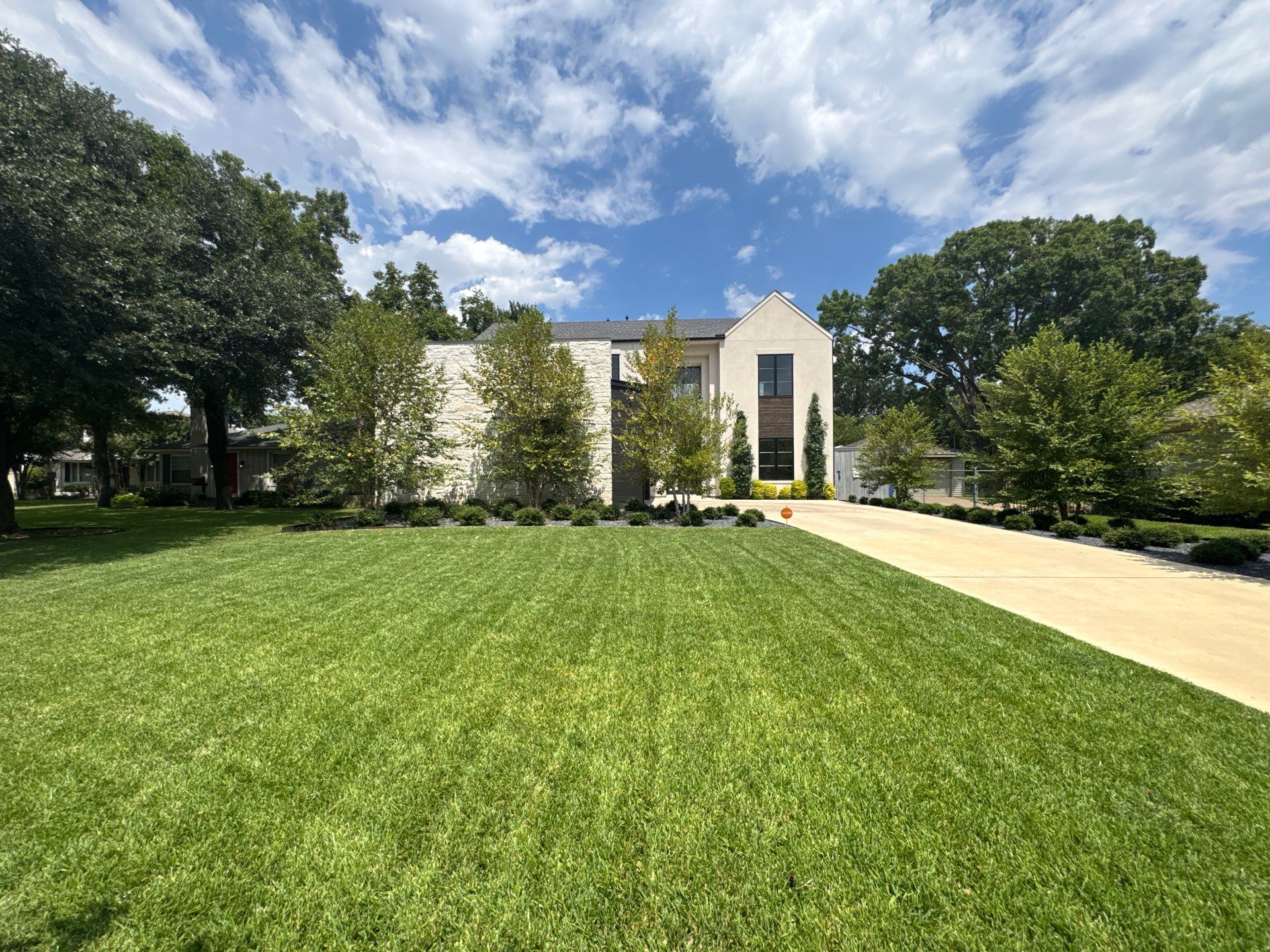
Natural grass is the right answer in Park Cities yards where the conditions actually support it. Bermuda grass — the most common warm-season turf in DFW — is a strong performer in the right setting. In full sun with well-calibrated irrigation and a properly prepared base, Bermuda establishes quickly, recovers well from moderate traffic, and delivers the dense, consistent surface that reads well on a Park Cities front lawn. The front yards of many University Park and Highland Park properties — where the canopy hasn't closed over the lawn and afternoon sun reaches the grass for the hours it needs — are good candidates for natural sod.
Standard Bermuda varieties require a minimum of six to eight hours of direct sun per day to maintain density. For Park Cities yards with moderate partial shade — five hours of direct sun or so — shade-tolerant Bermuda varieties like TifGrand® are worth considering. TifGrand® is certified for performance in 60–70% shade conditions, which puts it within range for yards where the canopy is present but not dense. It is available from DFW sod suppliers and has been specifically developed for exactly this use case. That said, TifGrand® still has a floor: in the deep shade under a fully closed live oak or post oak canopy where sun drops to two or three hours, even the most shade-tolerant Bermuda variant will thin and struggle.
The broader conditions that support natural sod in this market: adequate direct sun for the variety selected, a yard that drains properly so the root zone isn't saturated after rain, an irrigation system calibrated to the grass type and sun exposure rather than running on a default schedule, and a usage pattern that allows the turf to recover between heavy use periods. When these conditions are present, a natural lawn is a strong choice and one that integrates seamlessly with the visual register of the surrounding neighbourhood.
This is also where landscape installation sequencing matters. A natural lawn that goes in before drainage and grading issues are resolved, or on top of poorly prepared soil, will show problems within its first growing season. Getting the base right — soil preparation, grading, drainage — is what separates a natural lawn that holds up from one that requires repeated intervention. The principles that apply to landscape installation broadly in this market are covered in more depth in our post on what experienced University Park homeowners get right about landscaping.
If real grass is the right call for your yard, see how to choose and install the right sod for DFW.
Where Synthetic Turf Makes More Sense
Synthetic turf earns its place in Park Cities yards in the zones where natural grass is working against the conditions rather than with them. The most consistent scenarios are shade, traffic, and access.
Under established canopy. Even the most shade-tolerant Bermuda variants — TifGrand®, Celebration — are developed for around five hours of direct sun. Under a mature Park Cities live oak or post oak that closes over a side yard or back corner and reduces sunlight to two or three hours, no warm-season grass variety will hold density reliably. The biological requirements for photosynthesis are simply not met. St. Augustine tolerates shade better than standard Bermuda but still needs a minimum of four hours of direct sun and contends with the root competition that accompanies decades-old trees. In truly shaded zones, synthetic turf is not a compromise — it is the surface the conditions actually call for. It holds uniformly in deep shade, requires no reseeding, and removes the annual cycle of thin grass, bare patches, and attempted recovery that characterises shaded natural lawns in this climate.
In narrow and high-traffic areas. Side yards between structures, the stretch of lawn beside a driveway, and backyard areas near patios or play equipment are where natural grass in Park Cities yards tends to degrade fastest. The combination of concentrated foot traffic, reduced sun from adjacent structures, and the limited square footage available for recovery creates conditions that wear natural grass down regardless of irrigation quality. Synthetic turf maintains its surface uniformly under consistent use and does not develop the worn paths or mud areas that natural grass does in these conditions.
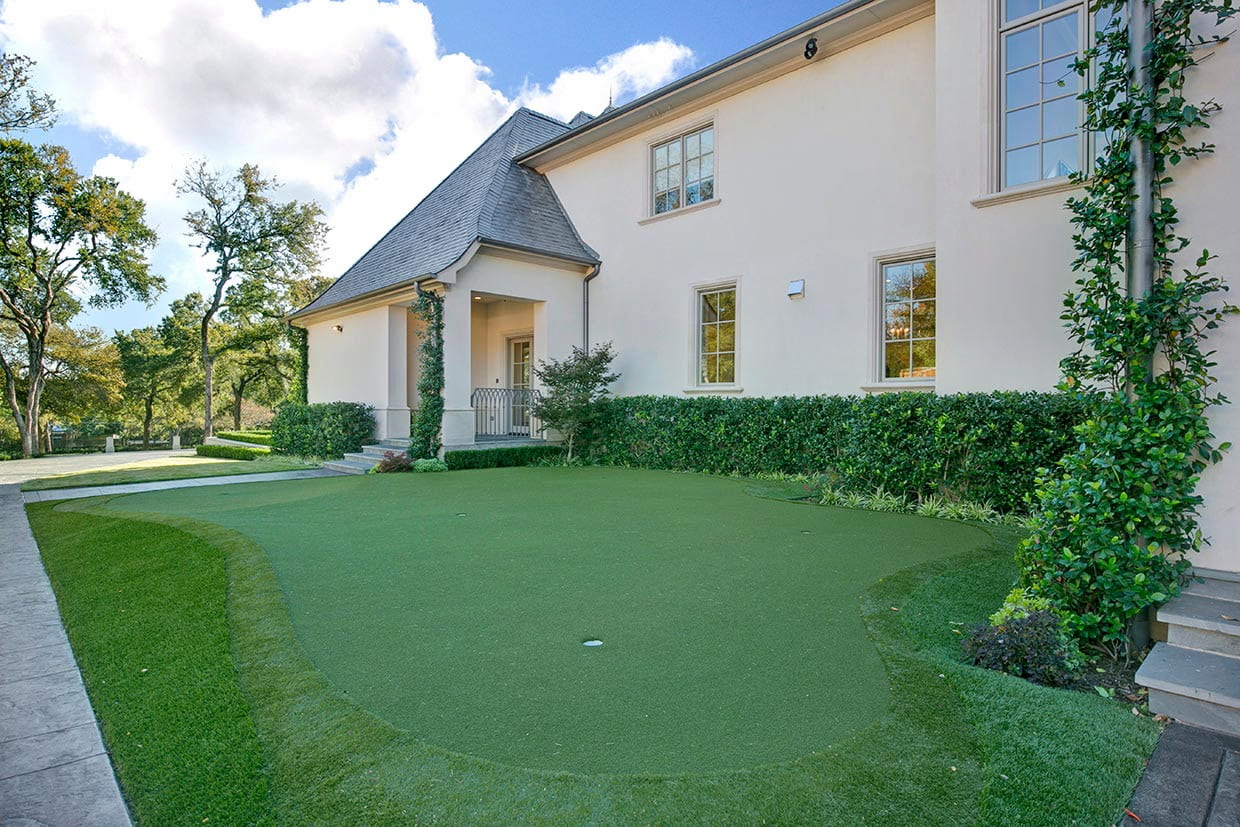
For putting greens. Synthetic putting greens are a purpose-built application where natural grass is not a practical alternative for most residential properties. The maintenance requirements of natural bent grass or Bermuda at putting-green quality — daily mowing, regular topdressing, precise irrigation management — are not realistic outside a golf course environment. High-quality synthetic putting green surfaces deliver consistent ball roll and pace without the maintenance burden, and integrate cleanly into the broader landscape design.
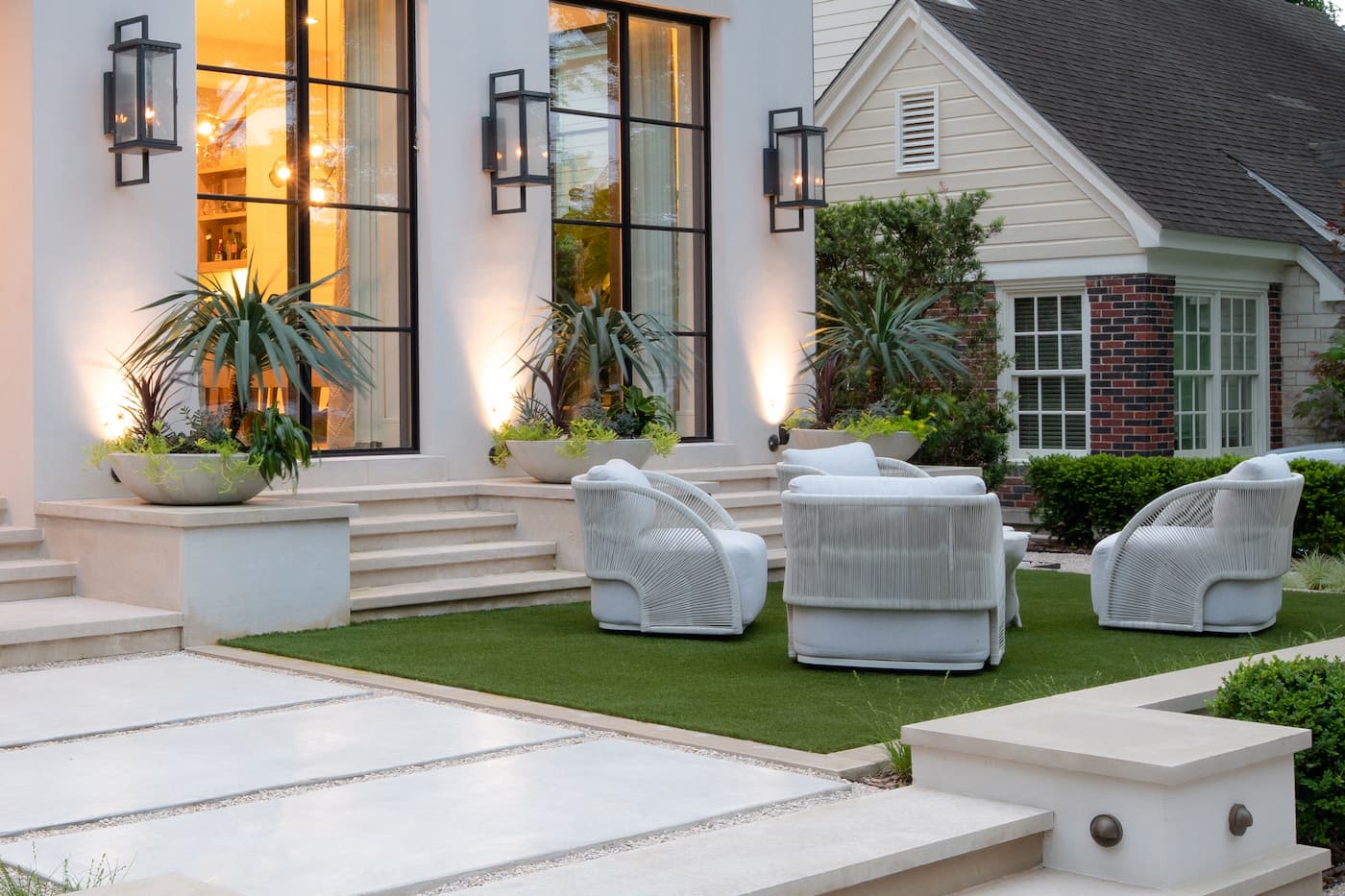
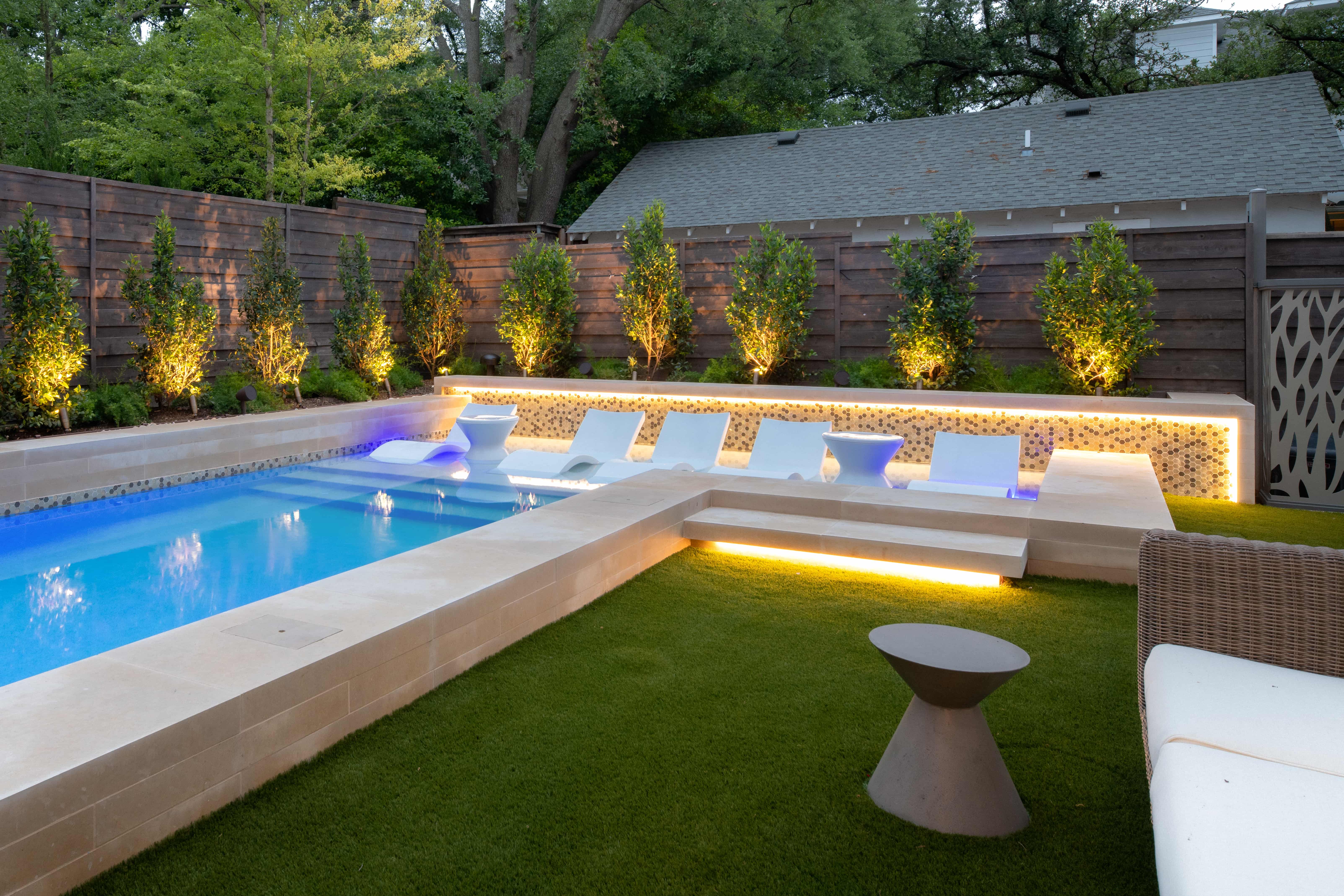
Work completed on synthetic turf installations in University Park and synthetic turf in Highland Park reflects the same design standard throughout: the turf area is part of the landscape, not applied on top of it. Edge detailing, surface grade, and fiber selection are all resolved as part of the broader project rather than treated as a standalone patch. What separates installations that hold up aesthetically in this market from those that don't is covered in detail in our post on what separates a quality Park Cities turf install from a poor one.
The Drainage Question That Applies to Both
Whether the choice is natural sod, synthetic turf, or a combination of both, drainage is the variable that determines whether the surface performs as intended. Natural grass planted on a lot with negative grade or poor soil drainage will develop the root zone saturation and fungal issues that cause it to fail. Synthetic turf installed without a properly graded base and drainage path will develop surface irregularities and drainage problems of its own.
In Park Cities yards — where clay soil is the baseline and older lot grades have often shifted over decades — drainage assessment belongs at the beginning of the planning process, not as a separate conversation after the surface work is decided. The synthetic turf services Outdoor Concepts delivers include base preparation and drainage integration as part of the installation, not as an add-on. The same applies to sod installation. The broader picture of how drainage preparation precedes any surface installation on DFW properties explains the sequencing that makes the difference between a surface that holds up and one that doesn't.
Frequently Asked Questions About Synthetic Turf vs Sod in the Park Cities
Does synthetic turf hold up under the Park Cities' established tree canopy?
Yes — and in most cases it performs better under canopy than natural grass does. Synthetic turf does not depend on photosynthesis, so the low-light conditions under a mature live oak or post oak that cause natural grass to thin out and fail have no effect on synthetic fiber. The main installation consideration under established canopy is root management — surface roots close to the trunk need to be addressed during base preparation so the turf surface sits evenly. When that groundwork is done correctly, synthetic turf under canopy is one of the more durable and low-maintenance surfaces available for these conditions.
Will synthetic turf look out of place in University Park or Highland Park?
Not when it is selected and installed correctly. The products and installation standards that hold up aesthetically in University Park and Highland Park are those where the fiber color, pile height, and edge detailing are consistent with the surrounding yard. Synthetic turf that reads as artificial typically has the wrong fiber tone for its context, sits too high relative to adjacent hardscape, or has poorly finished edges. Installations designed as part of a broader landscape plan — where the turf area is intentional rather than patched in — are consistently indistinguishable from well-maintained natural grass at normal viewing distances.
What happens to natural sod in a heavily shaded Park Cities yard?
Standard Bermuda requires six to eight hours of direct sun per day. Shade-tolerant varieties like TifGrand® — available from DFW sod suppliers — are certified to perform in around five hours of sun, making them a viable option for moderate partial shade. But under a mature tree canopy that drops sunlight to two or three hours, even TifGrand® will thin and fail over time. St. Augustine tolerates shade better than standard Bermuda but still needs a minimum of four hours of direct sun and contends with the root competition that comes with established trees. In truly shaded zones — directly under a closed canopy — no warm-season grass will perform reliably long-term.
Is synthetic turf a good fit for a Park Cities backyard with heavy foot traffic?
It is one of the best fits available. Natural grass in high-traffic areas — particularly in shaded or partially shaded backyards — degrades quickly under use. Worn paths, compacted bare patches, and muddy zones after rain are common outcomes in Park Cities backyards where children, pets, or regular entertaining put consistent pressure on the lawn. Synthetic turf maintains its surface uniformly under traffic and does not develop the wear patterns or mud that natural grass does. For backyards where the lawn is used regularly rather than just viewed, synthetic is typically the higher-performing surface over a multi-year horizon.
One regulatory note worth knowing: Texas House Bill 517, signed into law in 2025, prevents HOAs from prohibiting drought-tolerant or water-conserving alternatives to traditional turf — a category that includes synthetic grass. HOAs in Texas can still enforce appearance and maintenance standards, but they cannot require a minimum percentage of natural lawn or use aesthetic standards as a backdoor ban on water-conserving surfaces. For homeowners in University Park or Highland Park who have been hesitant about synthetic turf because of HOA concerns, this is a meaningful legal protection. University Park also adopted updated landscaping ordinance 26-007 in January 2026, so homeowners planning any significant grading, tree removal, or right-of-way work should verify current city requirements before a project begins.
If you are working through this decision for a property in University Park or Highland Park, the most useful starting point is a site assessment that maps the canopy coverage, grades the drainage, and identifies which zones in the yard will actually support natural grass long-term. Outdoor Concepts works across both cities and brings that assessment to every project before a surface recommendation is made. Call (214) 814-1081 or visit our University Park or Highland Park service area pages to learn more.
Similar Topic