Landscape Installation and Maintenance in Highland Park, TX
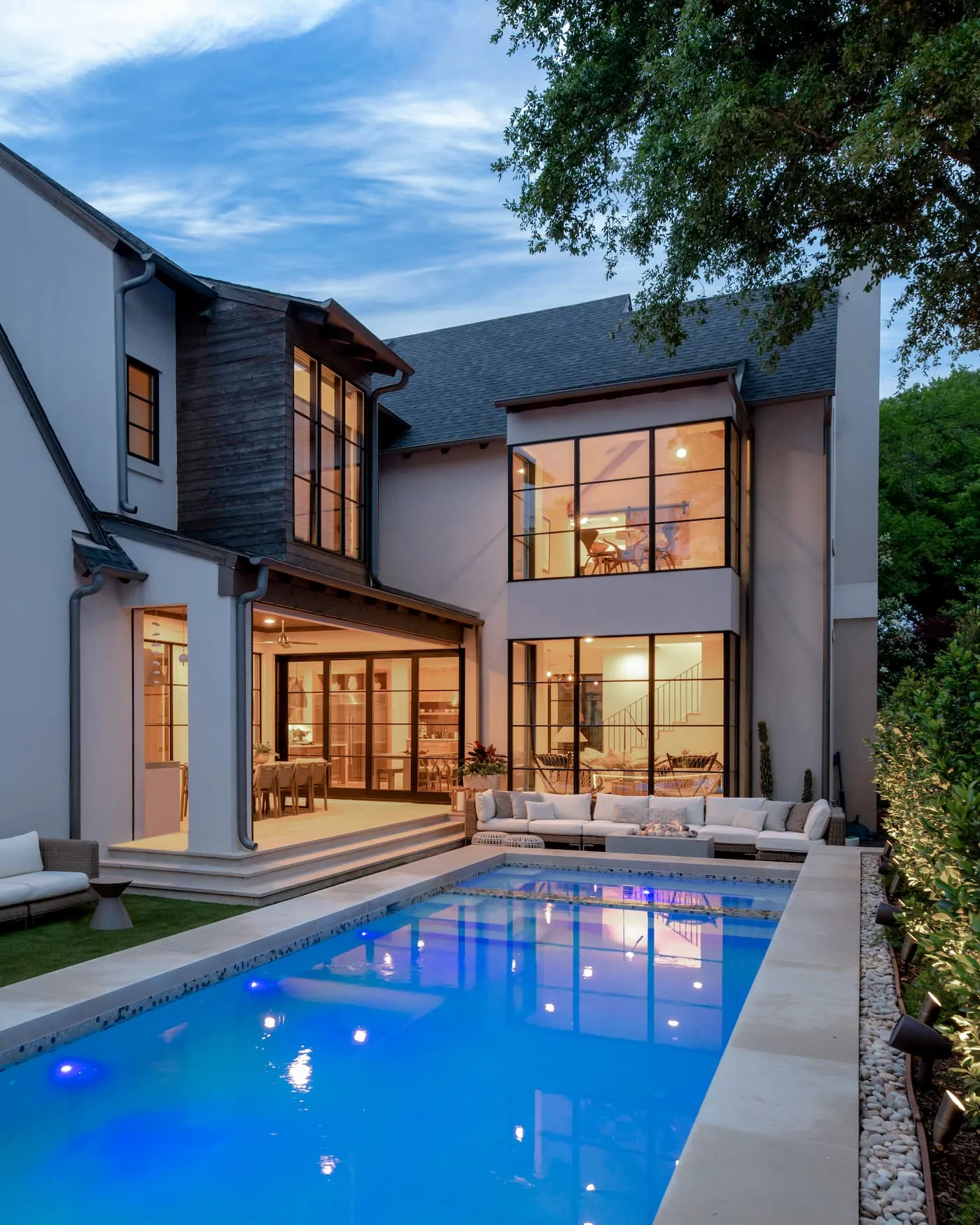
Highland Park is one of the most strictly maintained residential communities in Texas. The Town of Highland Park enforces deed restrictions that require properties to hold a consistent standard — a thin lawn, a worn corner, or a drainage issue that fades plantings doesn't stay anonymous for long. Add the mature elm and oak canopy across Armstrong Parkway, Beverly Drive, and the streets surrounding Highland Park Village, and landscape installation here isn't optional cosmetic work. It's part of how a property holds its standing.
Outdoor Concepts handles the installation, drainage, turf, irrigation, plantings, sod, and ongoing maintenance side of Highland Park yards — the variables that determine whether a landscape continues to meet the standard or starts to slip in year one.
To talk through a project, request a consultation or call (214) 945-2920.
What Does Landscape Work in Highland Park Actually Involve?
The service set is built around conditions on most Highland Park properties — heavy tree canopy, clay soil with poor drainage, deed-restriction-level finish requirements, and a tight window for visible disruption.
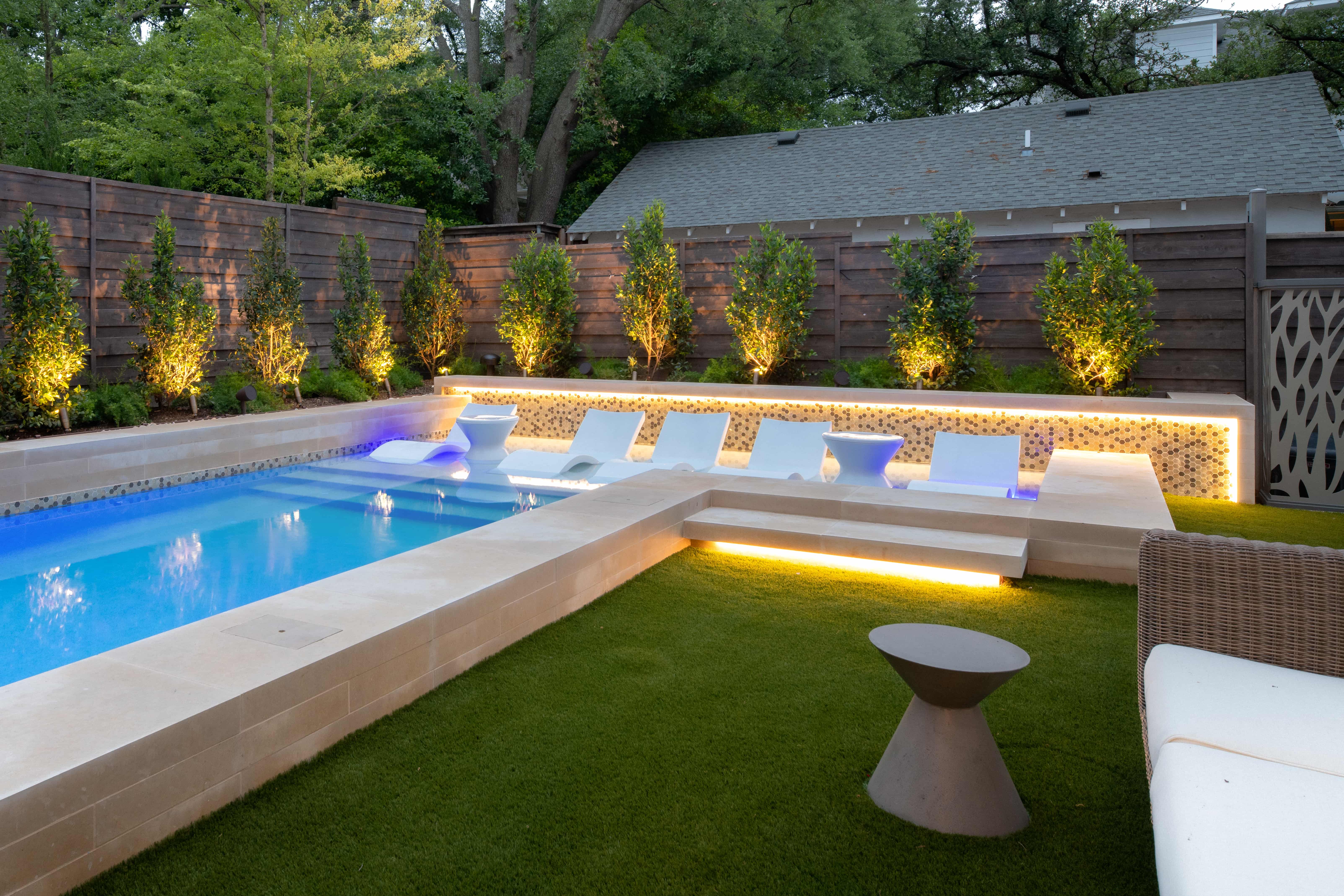
For properties where shade and canopy have ended natural grass for good, synthetic turf installation in Highland Park replaces the variability of natural grass with a surface that holds its appearance year-round, regardless of tree coverage or watering restrictions. The full synthetic turf service includes the engineered base, drainage integration, and product selection appropriate to the property and its deed restriction context.
For Highland Park properties with standing water, pooling against the foundation, or sod failure in the same low areas every season, drainage installation addresses the underlying conditions before any surface work begins. Our recent piece on what actually fixes flooding in a DFW yard covers the approach in detail.
For full-yard installations, landscape installation coordinates grading, drainage, irrigation, plantings, sod, and seasonal color as one sequenced project. Ongoing upkeep is handled through landscape maintenance — important on Highland Park properties where season-over-season consistency is part of how the property is judged.
Why Are Highland Park Yards Different From Other DFW Markets?
Three structural conditions make Highland Park installations distinct from work in newer DFW developments.
The first is the tree canopy. Mature oaks and elms across Highland Park create shade conditions natural grass cannot survive over time, regardless of overseeding, fertilization, or watering. The result is thin patches in areas visible from the street — a problem that compounds because Highland Park property visibility is high.
The second is the soil and topography. Highland Park sits on expansive clay with rolling topography near Turtle Creek, which means drainage paths matter more than on a flat lot. Without grading and drainage corrections, plantings and turf installations on top develop problems that don't surface until the next significant storm.
The third is the standards. The Town of Highland Park enforces deed restrictions that affect front-yard appearance, visible structural changes, and project scheduling. A contractor working here needs to know what gets through review and how to phase a project to stay within neighborhood expectations.
How Does Outdoor Concepts Approach a Highland Park Project?
Every Highland Park installation starts below the surface — site evaluation, grading, and drainage in the first phase, before any irrigation, turf, sod, or planting work begins. Once the base conditions are right, irrigation zones are designed to match the actual sun and shade across the yard, then surface installation follows. The order is not arbitrary; it is what separates an installation that performs in year three from one that doesn't. Estate work in the surrounding Park Cities market is in our project gallery, including a Dallas estate full landscape build.
Frequently Asked Questions About Landscape Work in Highland Park, TX
Will the installation meet Town of Highland Park standards?
In most cases yes — but Outdoor Concepts recommends confirming any synthetic turf or visible structural change with the Town of Highland Park before installation, as deed restrictions vary. Product selection, base construction, and project staging are all coordinated to fit the standards the neighborhood expects.
How do you handle work around mature Highland Park trees?
Tree root systems are addressed during base preparation. Excavation is paced to protect existing root structures while still creating a stable, level base for whatever surface goes on top. For installations under heavy canopy, this is one of the most consequential parts of the project.
What does the project sequence look like for a Highland Park property?
Site evaluation first, then grading and drainage corrections, then irrigation, then surface installation — turf, sod, plantings, seasonal color. Each phase depends on the one before it. Phasing is also coordinated to minimize visible disruption, which is part of the daily standard on Highland Park properties.
To talk through a project on your Highland Park property, request a consultation or call (214) 945-2920.
Highland Park is one of the most strictly maintained residential communities in Texas. The Town of Highland Park enforces deed restrictions that require properties to hold a consistent standard — a thin lawn, a worn corner, or a drainage issue that fades plantings doesn't stay anonymous for long. Add the mature elm and oak canopy across Armstrong Parkway, Beverly Drive, and the streets surrounding Highland Park Village, and landscape installation here isn't optional cosmetic work. It's part of how a property holds its standing.
Outdoor Concepts handles the installation, drainage, turf, irrigation, plantings, sod, and ongoing maintenance side of Highland Park yards — the variables that determine whether a landscape continues to meet the standard or starts to slip in year one.
To talk through a project, request a consultation or call (214) 945-2920.
What Does Landscape Work in Highland Park Actually Involve?
The service set is built around conditions on most Highland Park properties — heavy tree canopy, clay soil with poor drainage, deed-restriction-level finish requirements, and a tight window for visible disruption.
For properties where shade and canopy have ended natural grass for good, synthetic turf installation in Highland Park replaces the variability of natural grass with a surface that holds its appearance year-round, regardless of tree coverage or watering restrictions. The full synthetic turf service includes the engineered base, drainage integration, and product selection appropriate to the property and its deed restriction context.
For Highland Park properties with standing water, pooling against the foundation, or sod failure in the same low areas every season, drainage installation addresses the underlying conditions before any surface work begins. Our recent piece on what actually fixes flooding in a DFW yard covers the approach in detail.
For full-yard installations, landscape installation coordinates grading, drainage, irrigation, plantings, sod, and seasonal color as one sequenced project. Ongoing upkeep is handled through landscape maintenance — important on Highland Park properties where season-over-season consistency is part of how the property is judged.
Why Are Highland Park Yards Different From Other DFW Markets?
Three structural conditions make Highland Park installations distinct from work in newer DFW developments.
The first is the tree canopy. Mature oaks and elms across Highland Park create shade conditions natural grass cannot survive over time, regardless of overseeding, fertilization, or watering. The result is thin patches in areas visible from the street — a problem that compounds because Highland Park property visibility is high.
The second is the soil and topography. Highland Park sits on expansive clay with rolling topography near Turtle Creek, which means drainage paths matter more than on a flat lot. Without grading and drainage corrections, plantings and turf installations on top develop problems that don't surface until the next significant storm.
The third is the standards. The Town of Highland Park enforces deed restrictions that affect front-yard appearance, visible structural changes, and project scheduling. A contractor working here needs to know what gets through review and how to phase a project to stay within neighborhood expectations.
How Does Outdoor Concepts Approach a Highland Park Project?
Every Highland Park installation starts below the surface — site evaluation, grading, and drainage in the first phase, before any irrigation, turf, sod, or planting work begins. Once the base conditions are right, irrigation zones are designed to match the actual sun and shade across the yard, then surface installation follows. The order is not arbitrary; it is what separates an installation that performs in year three from one that doesn't. Estate work in the surrounding Park Cities market is in our project gallery, including a Dallas estate full landscape build.
Frequently Asked Questions About Landscape Work in Highland Park, TX
Will the installation meet Town of Highland Park standards?
In most cases yes — but Outdoor Concepts recommends confirming any synthetic turf or visible structural change with the Town of Highland Park before installation, as deed restrictions vary. Product selection, base construction, and project staging are all coordinated to fit the standards the neighborhood expects.
How do you handle work around mature Highland Park trees?
Tree root systems are addressed during base preparation. Excavation is paced to protect existing root structures while still creating a stable, level base for whatever surface goes on top. For installations under heavy canopy, this is one of the most consequential parts of the project.
What does the project sequence look like for a Highland Park property?
Site evaluation first, then grading and drainage corrections, then irrigation, then surface installation — turf, sod, plantings, seasonal color. Each phase depends on the one before it. Phasing is also coordinated to minimize visible disruption, which is part of the daily standard on Highland Park properties.
To talk through a project on your Highland Park property, request a consultation or call (214) 945-2920.