Why Most Backyard Putting Greens Fail Within 3 Years (And How to Avoid It)
Tips
5 Min Read
Learn why most backyard putting greens fail within 3 years—and what separates professional installation from budget work in Dallas-Fort Worth.
More Articles


Ready to have a flawless yard?
Book a consultation
Call/Text
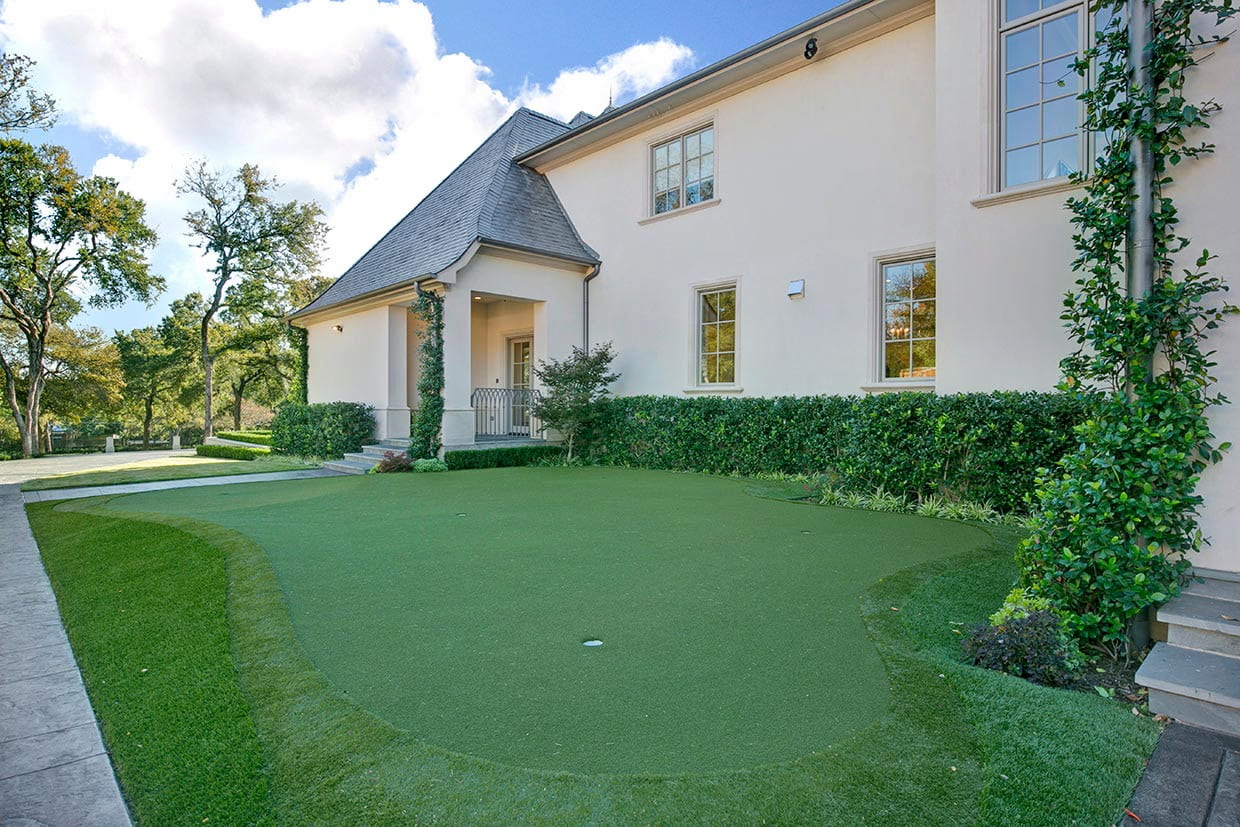
A backyard putting green is a significant investment. When installed correctly, synthetic putting greens can perform consistently for 15 to 20 years. But most fail much sooner—developing soft spots, drainage problems, and uneven surfaces within the first three years.
The failures aren't random. They follow predictable patterns, and they almost never originate with the turf itself. They start underneath, in the base construction and drainage engineering that most homeowners never see.
Here's what actually causes putting green failure in Dallas-Fort Worth, and what separates installations that last from those that don't.
The Base Determines Everything
The turf you see on the surface is 10% of what makes a putting green perform. The other 90% is the engineered base underneath—and this is where most installations fail.
A proper putting green base isn't just dirt with some gravel on top. It's a layered system: excavation to adequate depth (typically 6 to 8 inches), compacted aggregate base providing stability and drainage, precise grading to create contours and direct water flow, and a smooth setting bed for turf installation.
When any of these layers fails, the entire green fails. Inadequate compaction leads to settling and low spots. Poor grading creates water traps. Insufficient depth means the base shifts under foot traffic. Cheap or inappropriate base materials break down and lose stability.
In North Texas clay soil, base construction is even more critical. Clay doesn't drain. Without a properly engineered aggregate base that allows water to move through and away from the green, you're building a pond, not a putting surface.
Drainage Failures Destroy Greens
This is the number one cause of putting green failure in DFW: water that won't drain.
After heavy rain—which we get regularly in North Texas—water should disappear from a synthetic putting green within minutes. If it pools on the surface, sits underneath the turf, or creates soft spots, the installation is already failing.
Drainage problems develop from flat or improperly sloped surfaces that don't direct water off the green, bases constructed with non-permeable materials that trap water, missing or inadequate subsurface drainage in low-lying areas, and insufficient grading around the green perimeter that allows water to flow back onto the surface.
Once water starts pooling, the problems compound quickly. The base loses compaction and stability. Turf backing begins to delaminate. Mold and mildew develop underneath. Soft spots appear that distort ball roll. Within a year or two, the green is unplayable.
Proper drainage engineering prevents this. A well-built green has a slight surface slope (typically 1 to 2 percent) that moves water off the putting surface, a permeable aggregate base that allows water to pass through rapidly, subsurface drainage pipes in areas prone to water collection, and perimeter grading that directs runoff away from the green entirely.
In our installations, we treat drainage as the foundation of the entire project. The green can't perform if water doesn't move.
Turf Quality Matters—But Not How You Think
Most homeowners focus intensely on turf selection and assume quality differences are about aesthetics. The real issue is performance durability.
Professional-grade putting green turf is engineered for consistent ball roll, UV resistance in Texas sun, and backing integrity under foot traffic. Lower-grade turf might look similar initially, but it degrades faster: fibers flatten and lose resilience, backing deteriorates from moisture exposure, seams separate under use, and color fades unevenly.
But here's the critical point: even premium turf will fail if installed on a poor base. Turf can't compensate for drainage problems or unstable foundations. We've seen $15-per-square-foot turf fail within two years because it was installed over inadequate base construction. Conversely, mid-grade turf on a professionally built base will outperform premium turf on a cheap foundation every time.
The turf matters. The base matters more.
Poor Compaction Creates Progressive Failure
Compaction is invisible work that determines whether your putting green stays level for decades or develops depressions within months.
Aggregate base material must be compacted in lifts—typically 2 to 3 inches at a time—using professional plate compactors. Each lift gets compacted to specific density before the next layer goes down. This creates a stable, load-bearing foundation that won't settle under foot traffic or shift during rain events.
Inadequate compaction is easy to spot after the fact: soft areas when you walk on the green, visible depressions after heavy rain, uneven ball roll that changes over time, and turf that feels spongy instead of firm.
Fixing compaction failures requires excavating the affected areas, removing unstable material, installing properly compacted aggregate, and replacing the turf. It's expensive, disruptive, and completely avoidable with correct installation from the start.
We compact in lifts, test density at multiple points, and don't move to the next layer until we hit target compaction. This takes more time during installation, but it's the difference between a green that lasts 15 years and one that needs repair in year two.
Inadequate Excavation and Edge Containment
A putting green needs defined edges and proper depth to perform correctly. Shortcuts here create ongoing problems.
Insufficient excavation depth means there's not enough room for a proper base system. The green sits too high relative to surrounding grade, creating awkward transitions and drainage issues. Without adequate aggregate depth, the base can't provide structural stability or drainage capacity.
Edge containment prevents the base from migrating outward over time and keeps the green's shape defined. Professional installations use commercial-grade edging systems anchored into stable subgrade. Cheap or missing edge restraint allows the perimeter to shift, creating gaps between turf and edging, base material spreading beyond the green boundary, and perimeter drainage failures.
We excavate to full depth across the entire green footprint, install heavy-duty edge restraint before base construction begins, and ensure the green integrates properly with surrounding hardscape or landscape.
The Wrong Materials for North Texas Conditions
Not all base materials perform equally in DFW clay soil and weather conditions.
Crushed granite or decomposed granite works well in our climate—it compacts firmly, drains efficiently, and stays stable through freeze-thaw cycles. Clean, angular aggregate provides good drainage and structural stability.
Materials to avoid: round pea gravel (doesn't compact, shifts under load), limestone screenings that break down and create fines, soil-based mixes that don't drain, and recycled concrete that degrades inconsistently.
We source materials specifically for putting green construction in North Texas. The aggregate we use has been tested for drainage rate, compaction characteristics, and long-term stability in our soil and weather conditions.
What Separates Professional Installation From DIY or Budget Work
The cost difference between a $12,000 putting green and a $25,000 putting green often comes down to base construction quality. The cheaper installation uses thinner base depth, minimal or no compaction, inadequate drainage engineering, and lower-grade materials.
It might look identical when completed. Three years later, the budget installation has drainage problems, soft spots, and requires expensive repairs. The professional installation still performs like new.
At Outdoor Concepts, we're a landscape construction company that builds drainage systems, grades lots, and engineers hardscape across DFW every week. When we install a putting green, we bring that same construction expertise: proper excavation depth and site preparation, engineered aggregate base installed in compacted lifts, comprehensive drainage design including subsurface systems when needed, professional-grade turf installed on a stable foundation, and integration with surrounding landscape and hardscape.
We know what happens when base construction is inadequate because we've repaired enough failed installations. We build them correctly from the start.
How to Evaluate an Installation Before It Fails
If you're considering a putting green or evaluating existing installation quality, here's what to check:
Walk the surface after heavy rain. Water should be gone within 30 minutes. If it pools or the surface feels soft, there's a drainage or base problem.
Check for soft spots. Walk the entire green. Consistent firmness indicates proper compaction. Soft or spongy areas mean base failure is developing.
Inspect the perimeter. Edge restraint should be secure and flush with turf. Gaps or shifting edges indicate installation problems.
Ask about base construction. Any installer should be able to explain excavation depth, base material type, compaction process, and drainage design. If they can't, they don't know what they're doing.
Verify drainage design. On DFW properties, drainage isn't optional. Ask where water goes and how subsurface drainage is engineered.
A professional company will walk you through every layer of construction and explain why each matters. A company focused on selling turf will talk about pile height and color.
We Build Putting Greens That Last
Outdoor Concepts designs and installs putting greens as complete construction projects, not surface-only installations.
We handle site evaluation and drainage planning, excavation and base engineering, professional compaction and material selection, subsurface drainage when needed, premium turf installation, and integration with existing landscape features.
Whether you want a simple practice green or a performance installation with multiple breaks and challenges, we build it on a foundation engineered for North Texas conditions and long-term durability.
Considering a putting green for your property? Contact us for a site assessment. We'll evaluate your space, discuss drainage considerations, and explain exactly how we'd build a green that performs correctly for decades—not just years.
Similar Topic