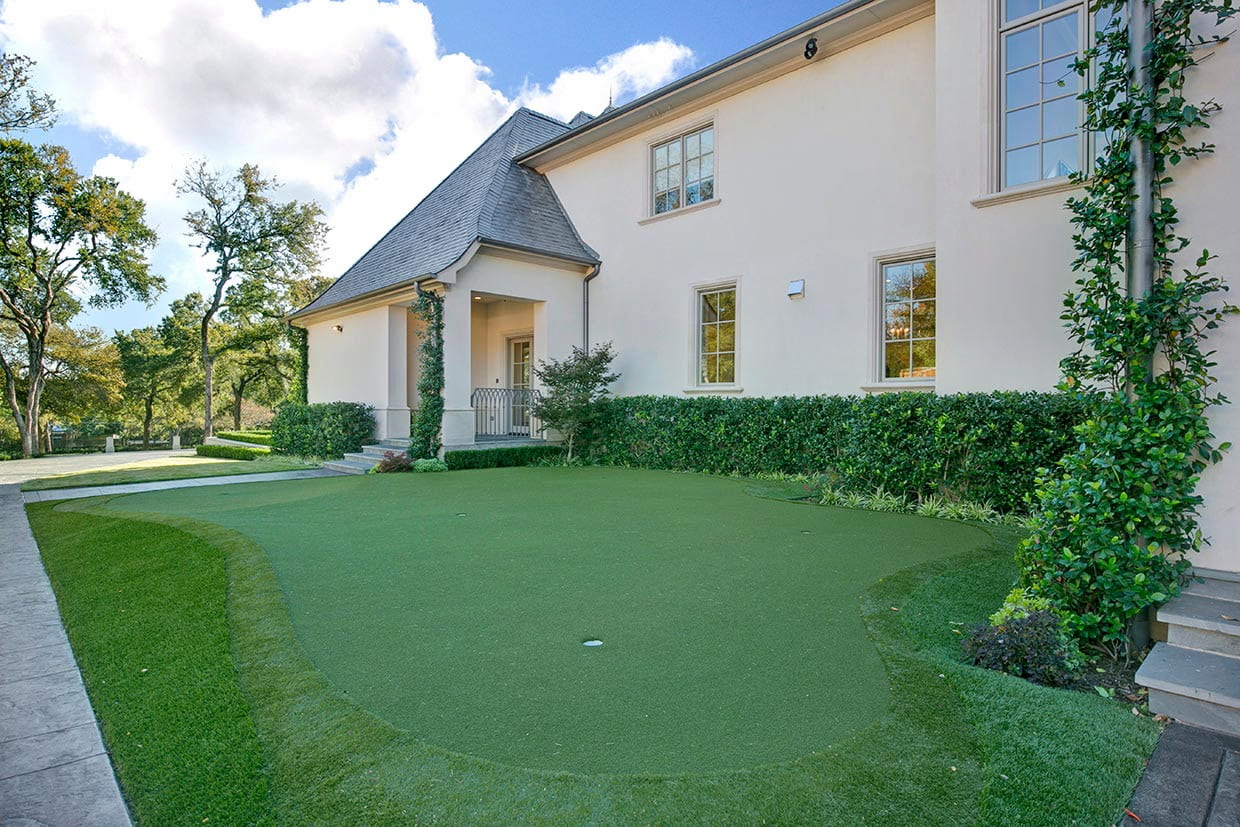
Synthetic Turf in the Park Cities: What Makes a Great Install in UP and Highland Park
Tips
5 Min Read
What separates a Park Cities synthetic turf install that holds its standard from one that doesn't — base, drainage, product, and the work you don't see.
More Articles


Ready to have a flawless yard?
Book a consultation
Call/Text
The Park Cities — University Park and Highland Park — share a set of conditions that turn synthetic turf from a casual upgrade into a piece of property infrastructure. Mature live oak and elm canopy across both neighborhoods has thinned out natural lawns for decades. The Town of Highland Park enforces deed restrictions that hold properties to a visible, consistent standard. Property visibility is high on every block, so a failed corner, a worn path, or a patchy front yard isn't anonymous. And both neighborhoods sit on the same expansive clay soil that pulls water sideways, cycles foundations, and complicates anything installed below ground.
For homeowners considering synthetic turf in the Park Cities, the question is rarely whether to install it — it's how to install it in a way that holds up under those conditions. This is where the difference between a Park Cities-grade install and a generic one shows up.
To talk through a synthetic turf project on your Park Cities property, request a consultation or call (214) 945-2920.
What Makes the Park Cities a Specific Synthetic Turf Market?
Three conditions consistently appear across University Park and Highland Park yards, and all three affect how synthetic turf needs to be installed here compared with newer DFW developments.
The first is the tree canopy. Mature oaks and elms across Armstrong Parkway, Beverly Drive, Lovers Lane, Southwestern Boulevard, and the streets around Snider Plaza and Highland Park Village have built shade conditions over decades that natural grass simply does not survive. Homeowners across both neighborhoods have repeatedly tried — overseeding, fertilization schedules, switching turf-grass varieties — and arrive at synthetic turf because nothing else holds. The same root systems that built the canopy also affect what can be installed beneath it; base preparation has to work around the trees, not against them.
The second is the standards. The Town of Highland Park enforces deed restrictions that affect front-yard appearance, visible structural changes, and construction work scheduling. University Park's standards are less formal, but the social and architectural expectations of the neighborhood produce similar pressure. A landscape installation in the Park Cities is judged by neighbors, by passing traffic, and in some cases by deed restriction review before any visible work can begin.
The third is the soil. The Park Cities sit on the same expansive clay that drives foundation movement throughout the Dallas metroplex. Clay drains slowly, holds water at the surface, and shifts measurably with moisture cycling. Synthetic turf installed on unmodified clay typically struggles in its first year. Drainage integration is part of a Park Cities install, not an upgrade. Our piece on drainage installation walks through how the systems work together on a clay-soil property.
What Determines Whether a Park Cities Turf Install Lasts?
The visible turf surface is the last thing a Park Cities installation involves. Almost everything that affects whether the system performs in year five — or starts to show wear in year two — happens below the surface, in decisions made before a single roll of turf is unloaded.
Base preparation is the single largest variable. Outdoor Concepts excavates and grades the native soil, then installs a compacted aggregate base engineered for DFW's clay-heavy conditions. Excavation depth, aggregate type, and the compaction method are not interchangeable. A base that is too shallow, under-compacted, or built from the wrong aggregate will shift and settle as the clay beneath it cycles with moisture. Once the turf is down, base problems can't be corrected without pulling the install up.
Drainage integration is the second variable, and it's the one most often skipped on installs that fail. Synthetic turf is engineered to drain through its backing, but that drainage only works if the base and surrounding grade carry water away from the area rather than holding it. On Park Cities lots — especially on the flatter blocks in University Park and near Turtle Creek in Highland Park — water has to be moved deliberately. Drainage paths are designed at the same time as the base, not added after.
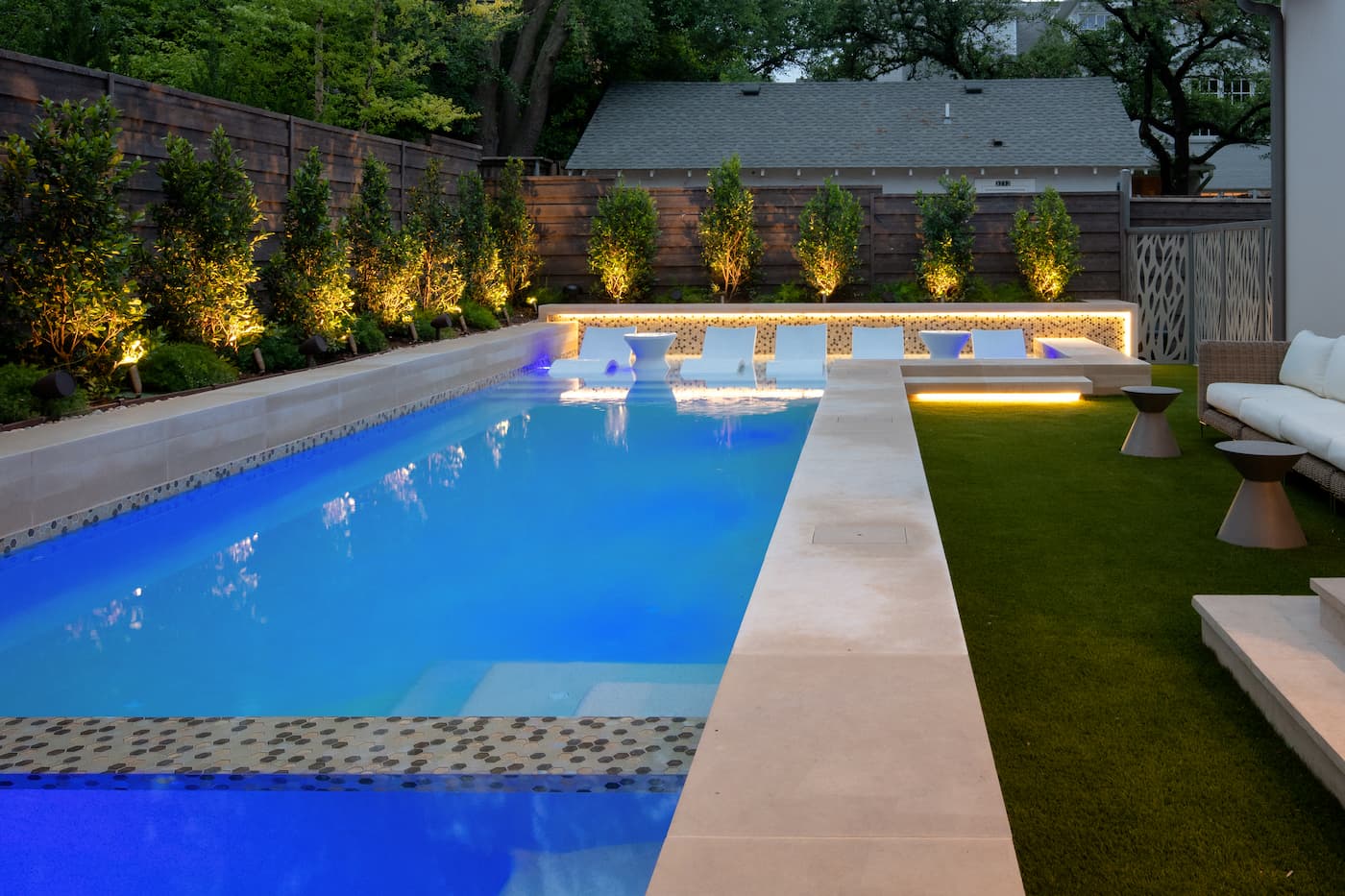
Product selection matters in the Park Cities specifically because deed restrictions and neighborhood standards push installers toward higher-tier products. Modern turf is engineered with blade variation, color profile, and infill characteristics that look natural at curb distance and at the close inspection a Park Cities front yard often receives. Selecting a product appropriate to the property — including how much shade it gets, how much foot traffic it sees, and whether children or pets use the area — affects how the install reads visually and how it wears over time. The fuller variable list is in our complete guide to synthetic turf in Dallas.
Edge work and shaping are where Park Cities installs are typically judged. A turf area that ends in a clean curve around an existing oak, a precise transition into an adjacent planting bed, or a flush meeting with hardscape reads as a finished landscape. A turf area that ends in a rough straight cut against a different surface reads as a retrofit. Park Cities properties are routinely inspected at close range by their owners, by neighbors walking by, and during deed restriction review in Highland Park. Edge work has to hold up at that distance.
Infill choice influences surface temperature, drainage, and feel underfoot. Different infill options perform differently in heat, in pet applications, and in high-traffic zones. The decision is made during product selection, not after. For a deeper look at how turf systems hold up under DFW summer conditions specifically, our piece on what actually holds up in Texas heat walks through the relevant variables.
Why Do Park Cities Yards Reveal Bad Installs Faster Than Other Markets?
A synthetic turf install that would pass for adequate in a newer development can read as a problem in the Park Cities for three reasons.
The first is foot traffic concentration. Park Cities properties are used — children, dogs, gathering areas around the pool or the back of the house. Concentrated wear patterns expose installs where the base was under-compacted or the infill was selected for the wrong use. A bad install holds up under light traffic for the first year and shows in year two as wear paths or surface compression.
The second is foundation cycling. The expansive clay underneath Park Cities homes moves with the seasons. A turf install that does not account for that movement — through correct base depth, drainage integration, and edge work — will show small shifts at edges and seams as the soil swells and contracts.
The third is visibility. Most Park Cities front yards are visible from the street at distance, and most back yards are visible across property lines. A loose seam, an uneven edge, a section that has visibly compressed — these are visible problems on a Park Cities property in a way they would not be on a deeper-set lot. The standard isn't generous.
How Should a Park Cities Homeowner Evaluate a Synthetic Turf Contractor?
Before signing with any installer in University Park or Highland Park, ask about the parts of the project that are invisible after the install is complete. How deep is the excavation, what aggregate is used for the base, and what compaction method is applied? How is drainage handled — both under the turf and at the surrounding grade? What product is being specified, and why was it chosen for this particular property and its shade, traffic, and use pattern? How will edges be cut, secured, and transitioned to adjacent surfaces?
A contractor who answers those questions in specifics — with measurements, product names, and decisions tied to the actual conditions of the property — is doing the work. A contractor who answers in general reassurance ("we always do it right," "we have decades of experience") is selling a feeling.
Outdoor Concepts works on synthetic turf installations across University Park, Highland Park, and the broader DFW metroplex — both as standalone projects and as part of full landscape builds that include grading, drainage, irrigation, and plantings. For a property-specific look at how an install would be approached, the University Park synthetic turf service area page and the Highland Park synthetic turf service area page cover the city-level context. The full synthetic turf service page covers the work itself. Many Park Cities clients pair a turf installation with a backyard custom putting green, which uses the same engineered base. Completed installations are in the backyard turf transformations album.
Frequently Asked Questions About Synthetic Turf in the Park Cities
Will synthetic turf meet Highland Park's deed restriction requirements?
In most cases yes, but Outdoor Concepts recommends confirming any synthetic turf installation with the Town of Highland Park before work begins, as deed restrictions vary by property. Modern turf products are engineered to a high aesthetic standard, with blade variation and color profile that differ significantly from older-generation materials. Product selection, base construction, and project staging are all coordinated to fit the standards the neighborhood enforces.
How does synthetic turf perform under Park Cities oak canopy?
Synthetic turf performs identically in full shade and full sun, which is the property University Park and Highland Park homeowners are usually solving for. The mature oak canopy across both neighborhoods creates shade conditions that natural grass thins out in and rarely recovers from. Tree roots are addressed during base preparation — excavation is paced to protect existing root structures while creating the stable, level base the system needs. A well-built install respects the canopy and works around it rather than against it.
How long does a typical Park Cities synthetic turf install take?
Most residential synthetic turf installations in University Park and Highland Park are completed within two to four days. Projects that combine turf with a putting green, complex shaping around existing landscape, or work that includes grading and drainage may take longer. Outdoor Concepts provides a clear project schedule before work begins so homeowners know what to expect from day one through completion.
Can synthetic turf integrate with existing Park Cities landscape elements?
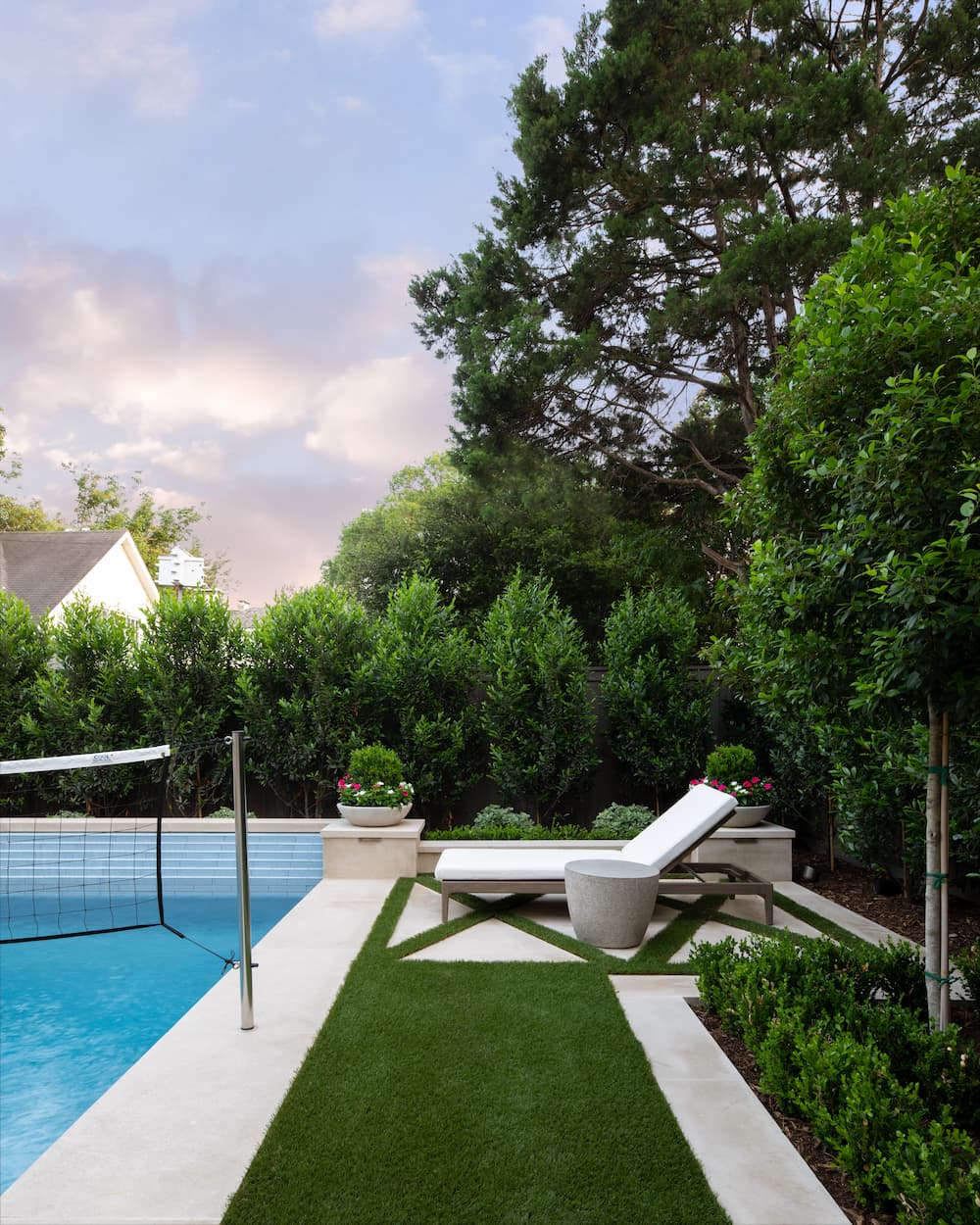
Yes. Most Park Cities installations are not full-yard replacements — they are partial integrations where turf replaces a section of failed sod or shaded lawn while existing plantings, walkways, and structural elements stay in place. Precision-cut edges, custom shaping around beds and trees, and clean transitions to hardscape are part of every install. The visible standard at the edges is what separates professional-grade work from a generic install.
To start a synthetic turf project on your Park Cities property, request a consultation or call (214) 945-2920.
Similar Topic