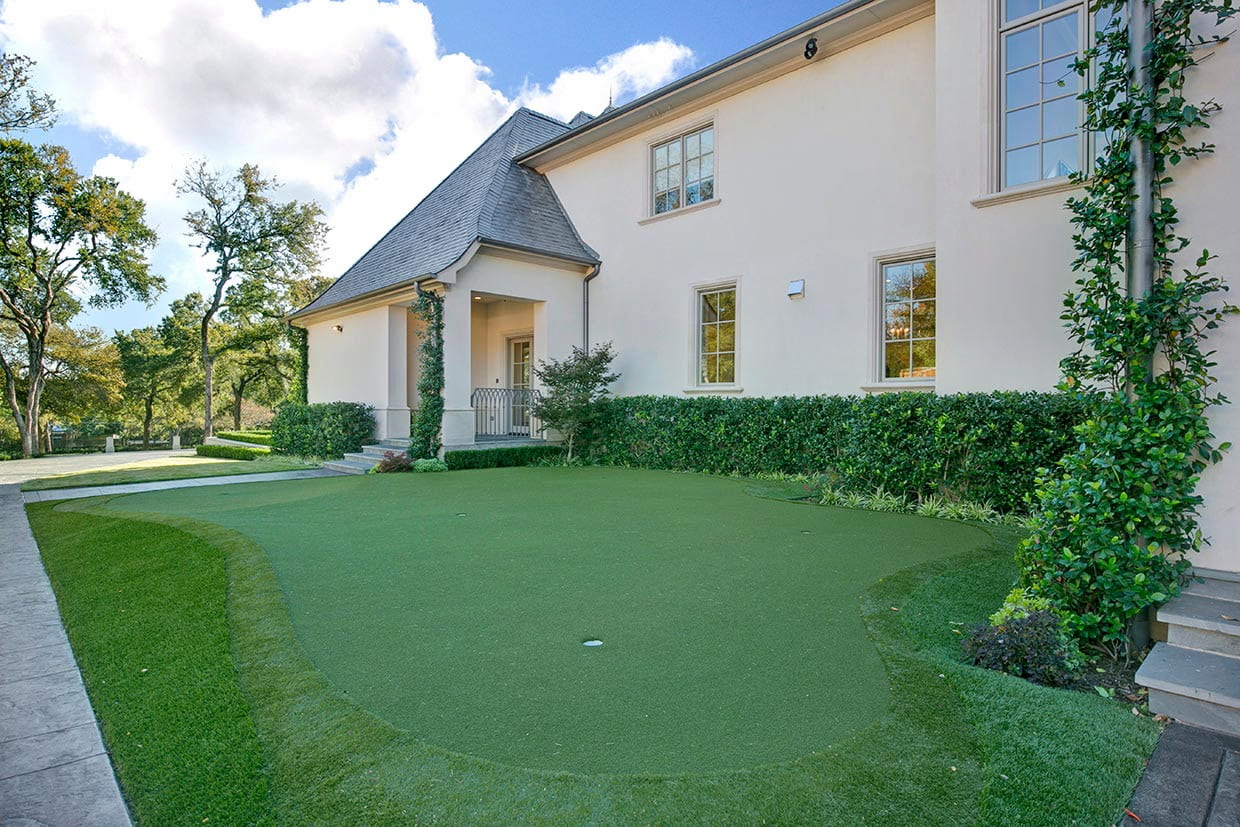
What Actually Determines Whether a DFW Landscape Installation Lasts
Tips
5 Min Read
Most DFW homeowners spend months — sometimes longer — thinking about what they want their yard to look like. They research styles, look at project photos, talk to designers. By the time they're ready to hire an installation contractor, the visual is fully formed in their head. What they haven't spent nearly as much time thinking about is what goes into the ground before any of that vision becomes visible.
More Articles


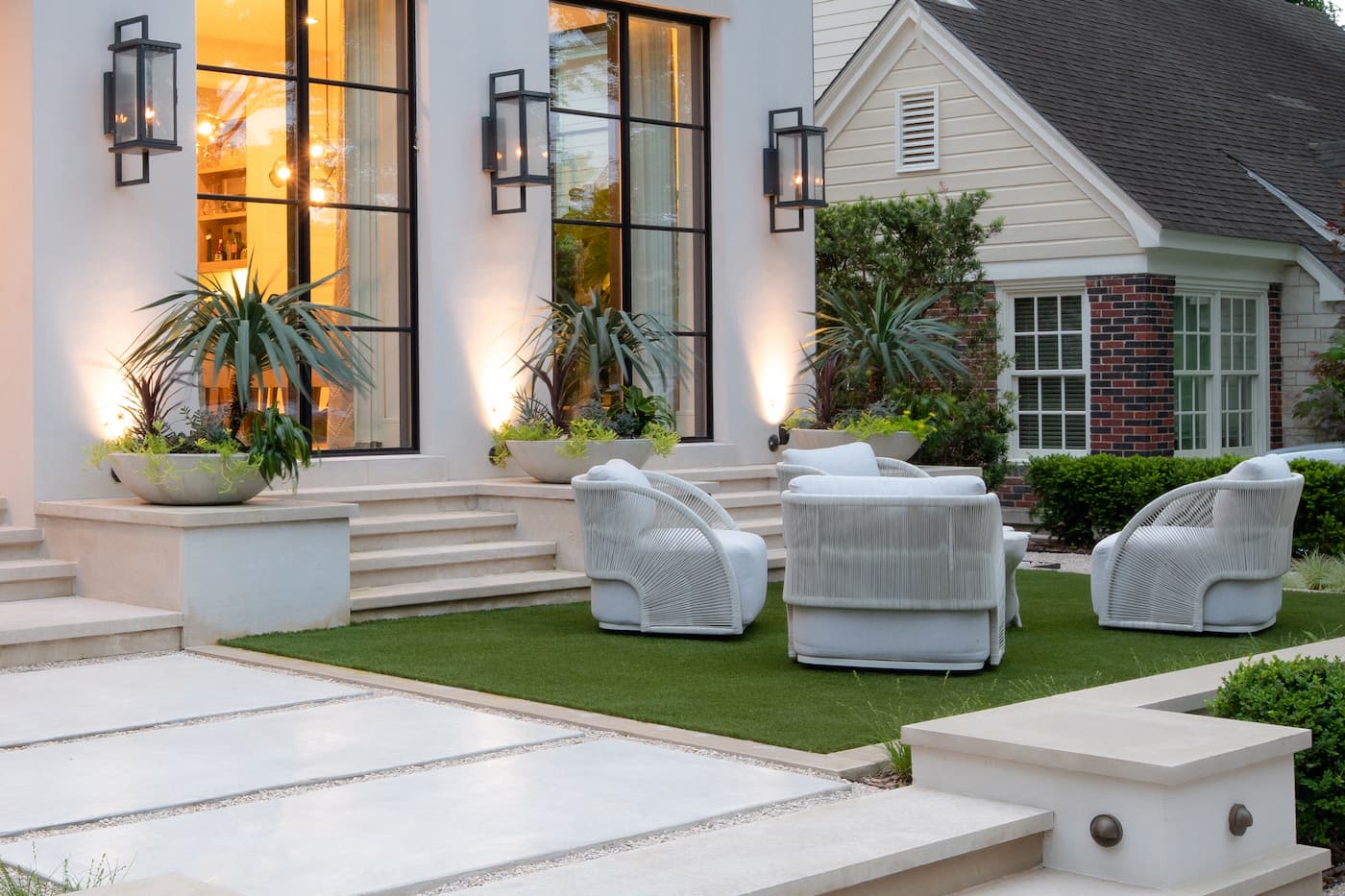
Ready to have a flawless yard?
Book a consultation
Call/Text
That's exactly where landscape projects succeed or fail.
Installation quality is not a secondary consideration. It is the variable that determines whether a finished yard looks the same in year three as it does on day one — or whether it develops drainage problems, shifting turf, dying plantings, and irrigation failures within the first couple of seasons. In DFW specifically, the region's soil conditions, heat load, and rainfall patterns make execution decisions matter more, not less, than they do in most other markets.
This is what Outdoor Concepts focuses on. Not the rendering. The result.
Why Does DFW Soil Make Installation So Much Harder?
The Dallas-Fort Worth area sits on a deep layer of expansive clay soil — sometimes called "black gumbo" — that behaves unlike almost any other residential soil type in the country. In dry conditions it contracts and cracks. After rain it expands significantly, sometimes shifting structures built on top of it. For landscape installation, this creates a set of challenges that aren't present in markets with sandy or loam-heavy soil.
Clay soil drains poorly. Water sits on the surface or moves slowly through the top layer, creating conditions that drown root systems, cause standing water in low areas of the yard, and accelerate turf failure in synthetic installations that weren't built on a properly engineered base. In natural grass or sod installations, clay soil compacts under foot traffic faster than other soil types, which suffocates root development and creates thin, worn patches — one reason getting sod to take root on DFW clay depends on the prep underneath.
Every installation decision Outdoor Concepts makes — base preparation depth, drainage path design, grading slope, aggregate selection for synthetic turf systems — is made with DFW clay soil in mind. A base or grading plan designed for sandy soil will fail in this market. The same goes for plantings: species selection, planting depth, and irrigation zone design all need to account for how this soil holds and moves water over time.
What Happens Before the Visible Work Begins?
The first day of a landscape installation on an Outdoor Concepts project does not look like much from the street. Grading and soil preparation happen first — and they're the most consequential part of the entire project.
Grading establishes the slope and drainage path for the entire yard. A properly graded site moves water away from the foundation, prevents pooling in low areas, and creates the level or contoured surface that everything else — turf, plantings, irrigation, drainage structures — is installed on top of. Grading done poorly, or skipped entirely, means that every element installed on top of it is already operating on borrowed time. Even the best turf product or the healthiest plantings won't perform correctly on a surface that holds or misdirects water.
Drainage is addressed during this same phase, not as an afterthought. Outdoor Concepts evaluates existing drainage paths, identifies areas where water accumulates or flows incorrectly, and installs drainage systems — French drains, channel drains, catch basins — before any surface installation begins. This is especially important for DFW properties that sit in low areas or have significant impervious surface (concrete, pavers, rooflines) directing water into the yard. You can learn more about how our team approaches this in our drainage installation services.
For synthetic turf specifically, a compacted aggregate base is installed after grading. This base layer — typically crushed granite or decomposed granite compacted to specification — is what gives the turf system its long-term stability. It determines drainage performance, surface levelness, and resistance to shifting over time. Outdoor Concepts does not vary the base preparation process based on project budget or timeline. It is done correctly on every project because it cannot be corrected after the turf is down. More on this in our complete guide to synthetic turf installation in Dallas.
How Irrigation Integration Affects Everything Else
Irrigation is installed after grading and drainage, and before plantings go in. The sequencing is not arbitrary — it is determined by what each system needs to function correctly long-term.
Irrigation zones are mapped to match the planting plan: shade-tolerant species in lower-output zones, sun-exposed beds and lawn areas in higher-output zones, with separate run schedules for turf versus planted areas. In DFW, where summer evaporation rates are high and drought restrictions frequently limit watering to specific days or times, an irrigation system designed to match the actual plant material and sun exposure of the yard is the difference between plants that establish successfully and plants that struggle through their first summer.
Outdoor Concepts installs and programs irrigation systems as part of full landscape builds — coordinated with grading and drainage rather than added after the fact. See our irrigation systems services page for details on what's included. When the irrigation system is designed before plantings go in, it can be laid out for optimal coverage and access. When it's added after, it's working around an existing landscape rather than being built into it.
Why Plantings Fail in the First Year — and How to Prevent It
A significant number of landscape installation failures in DFW come down to a few consistent causes: wrong species for the specific light and soil conditions on that property, wrong planting depth for the soil type, poor irrigation calibration, and no grading correction before installation. None of these are product problems. They are installation and execution problems.
Outdoor Concepts approaches plantings — softscape, ground cover, sod, seasonal color — as part of a system, not a collection of individual elements. Sod installation, for example, requires properly prepared soil, correct grading to ensure even watering distribution, and immediate irrigation calibration after installation. Sod laid on poorly graded or unprepared soil, or left without correct irrigation through the first few weeks, fails to establish root contact and dies back regardless of the variety. Learn more about how we approach planting installation and softscape for DFW properties.
For homeowners investing in a full yard installation, the planting phase is also where a landscape maintenance plan becomes worth discussing before the project is complete. Year one maintenance — correct watering schedules, fertilization timing, mulch depth management — plays a significant role in whether plantings establish successfully or require replacement. Getting this right from the start reduces long-term maintenance cost significantly.
What to Ask Before You Hire a Landscape Installation Contractor
The quality of a landscape installation is almost entirely invisible once the project is finished. You cannot look at a completed yard and know whether the base was properly compacted, the drainage was engineered correctly, or the irrigation zones match the planting plan. This is why the conversation before the project starts matters so much.
Before signing with any installation contractor in DFW, ask these questions directly:
What is your grading and soil preparation process before any surface installation? A contractor who skips or minimizes this step is the single biggest predictor of long-term problems.
How do you address drainage on properties with DFW clay soil? The answer should be specific — not "we make sure it drains."
For synthetic turf: what is your base construction specification? Depth of excavation, aggregate type, compaction method. A legitimate answer will be detailed.
How is irrigation zoning determined? It should be mapped to specific plant material and sun exposure, not applied as a uniform schedule across the whole yard.
What does year-one maintenance look like, and do you offer it?
The answers to these questions tell you more about what you're actually buying than any before-and-after photo.
Outdoor Concepts works with homeowners across DFW — including University Park, Highland Park, Frisco, Plano, and the surrounding areas — on full landscape installations that start with proper site preparation and follow through to completed, maintained results. You can browse completed projects in our project gallery and review the full range of services on our services page.
For projects that begin at the design and planning stage, Outdoor Concepts works alongside design partners like Blount Designs to ensure the installation executes the plan as built — from grading through final planting. When you're ready to talk through your project, request a consultation or call us at (214) 945-2920.
Similar Topic