Artificial Grass in Dallas: What Actually Holds Up in Texas Heat
Tips
5 Min Read
The difference between artificial grass that still looks like the day it was installed five years in, and artificial grass that looks tired, hot, and uneven, comes down to a handful of decisions made before the turf is ever unrolled. Product quality matters. Installation quality matters more.
More Articles


Ready to have a flawless yard?
Book a consultation
Call/Text
Artificial grass in Dallas is an easy yes on paper. No mowing. No watering during drought restrictions. No brown spots in August. A yard that looks the same in January as it does in July. For a homeowner who has watched a natural lawn slowly lose the fight against Texas heat, clay soil, and stretched-thin irrigation schedules, the appeal is obvious.
The harder question is which artificial grass actually holds up in a Dallas yard — and which starts to fade, flatten, or drain poorly within the first few summers.
Not every installation performs the same. The difference between artificial grass that still looks like the day it was installed five years in, and artificial grass that looks tired, hot, and uneven, comes down to a handful of decisions made before the turf is ever unrolled. Product quality matters. Installation quality matters more.
This is what's actually happening beneath the surface of a synthetic turf installation — and what separates a Dallas yard that holds up from one that doesn't.
To talk through a synthetic turf installation for your Dallas property, request a consultation or call (214) 945-2920.
Does Artificial Grass Really Hold Up in Dallas Summers?
The honest answer: good artificial grass, installed correctly, holds up well across multiple Dallas summers without meaningful degradation. Lower-quality artificial grass, or high-quality artificial grass installed without proper base preparation, does not.
The two variables that drive Dallas-specific performance are UV resistance and drainage. Direct summer sun in North Texas delivers intense heat paired with extended UV exposure — enough to fade turf fibers that aren't adequately UV-stabilized, and enough to break down backing material manufactured to a lower spec. Residential-grade artificial grass built with high-quality polyethylene fibers and a UV-stabilized polyurethane backing retains its color and structural integrity through year after year of direct sun. Cheaper turf will not, regardless of how good it looks on installation day.
Surface temperature is the second consideration. Artificial grass does get warmer than natural grass in direct sunlight — this is a product characteristic of every synthetic turf, not a defect specific to one brand. Certain installation choices, including infill selection and how the turf sits within the broader yard plan, can reduce peak surface temperatures noticeably. For pool surrounds, pet areas, and full-sun yards, these are decisions worth making deliberately before installation rather than discovering afterward.
What Separates Artificial Grass That Lasts From Artificial Grass That Fails?
Four variables do most of the work, and only one of them is the turf product itself.
Base preparation. Every synthetic turf installation sits on top of a compacted aggregate base — typically crushed or decomposed granite, installed and compacted to specification before the turf is rolled out. This base is what gives the system its long-term stability: even surface, correct drainage slope, resistance to shifting and settling. In DFW specifically, where expansive clay soil moves significantly with moisture changes, base preparation is not optional and it cannot be corrected after the fact. A turf installation built on inadequate base prep can develop ripples, low spots, or drainage problems over time, no matter how good the product is. Learn more about how Outdoor Concepts approaches grading and drainage as part of every synthetic turf project.
Turf fiber and backing. The fibers themselves — the visible "grass" — are the product variable most homeowners focus on. Polyethylene is the most common fiber material for residential artificial grass in Dallas because it offers a realistic look, a soft feel, and strong UV stability. Nylon is more durable but often too rigid for a residential yard. The backing material matters equally — it determines how well the turf drains and how long it holds its shape. Urethane and polyurethane backings are the current residential standard; lower-cost alternatives break down faster under heat and UV.
Infill. Infill is the material spread between the turf fibers that holds them upright, adds ballast, and affects surface temperature. Silica sand is the standard baseline. Acrylic-coated sand, antimicrobial infills for pet areas, and temperature-reducing infills designed for hot climates are all options worth discussing with an installer before the project starts. Infill is not a minor detail — it directly affects how the turf looks, feels, performs, and holds up over time.
Drainage integration. DFW clay soil does not drain on its own. A synthetic turf installation on a clay lot needs either a drainage system beneath or adjacent to the turf area, or a drainage-oriented base construction that moves water horizontally away from the yard. This is evaluated property-by-property, not applied as a one-size template. For properties with existing drainage issues, those are addressed during installation — not assumed to resolve themselves once the turf is down. For a deeper look at how drainage is integrated into turf projects, see our complete guide to synthetic turf in Dallas.
Why Dallas Homeowners Are Moving From Natural Lawns to Artificial Grass
The reasons come up in nearly every consultation, and they're rarely about aesthetics alone.
Drought restrictions. DFW cities periodically implement watering restrictions that limit lawn irrigation to specific days or times — and during more severe drought years, to tighter stages. Natural lawns in areas like Highland Park, University Park, Frisco, and Plano are under more pressure than they were a decade ago to perform on less water. Artificial grass removes that variable entirely.
Clay soil performance. The region's expansive clay soil makes natural turf maintenance harder than it is in most other parts of the country. Compaction under foot traffic, poor drainage, and seasonal cracking all affect how a natural lawn performs year after year. Artificial grass installed on a properly engineered base sidesteps most of these issues. More on how installation quality interacts with DFW soil in our broader landscape installation services.
Year-round appearance. Natural grass in DFW looks different in January than it does in June. For homeowners investing in a full property buildout — especially in neighborhoods where visual consistency matters — artificial grass delivers the same surface every day of the year. Paired with well-executed plantings and softscape, the result is a yard that holds its finished look through every season.
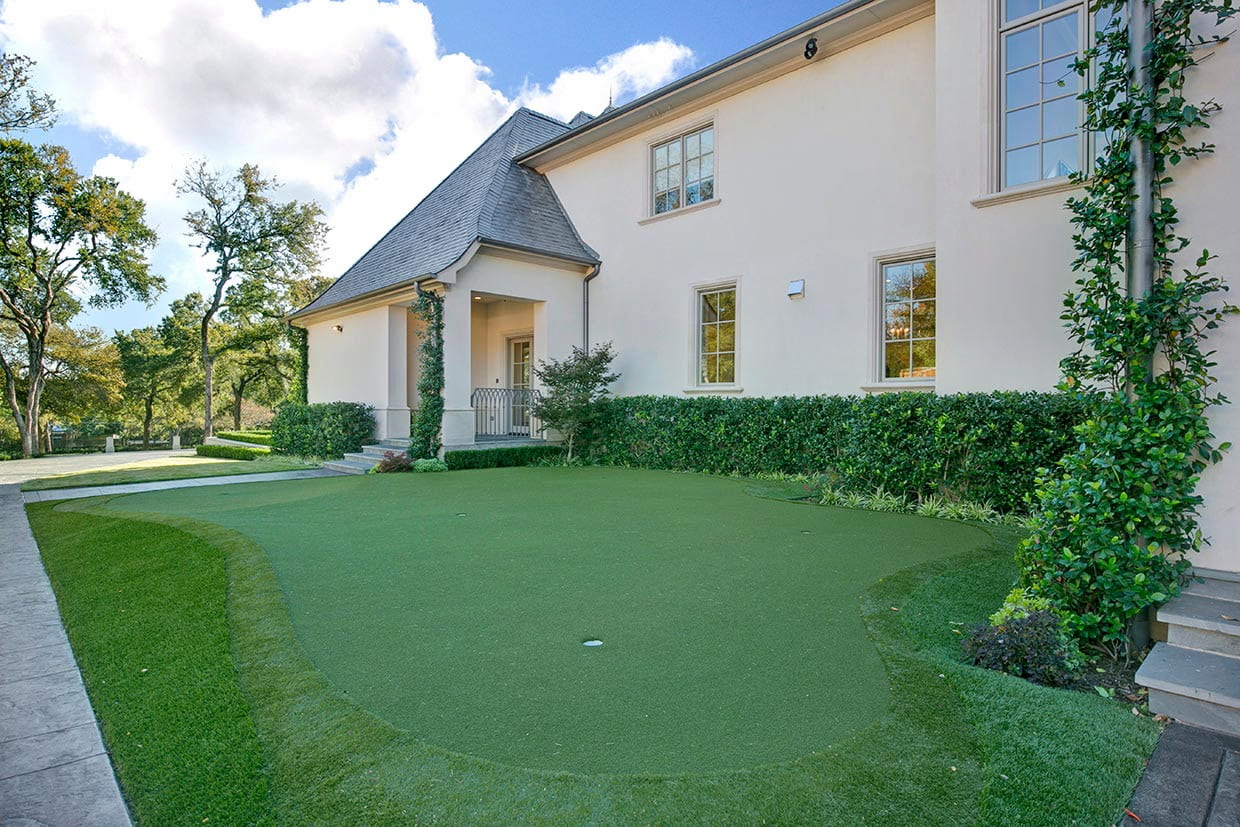
Pet and high-use areas. Natural grass rarely survives heavy pet traffic or sports use. Artificial grass designed for these applications, with appropriate infill and pile height, performs under use that would destroy a natural lawn. Outdoor Concepts installs synthetic turf for pet yards, putting greens, and full-property applications across the Dallas area — you can see completed examples in our backyard turf transformations album.
Is Artificial Grass Right for Every Dallas Property?
Not always — and that answer matters more than a sales answer.
Artificial grass performs well in front yards with full sun exposure, backyard pet areas, play areas, pool surrounds, rooftop installations, and anywhere consistent green coverage is the priority. It works especially well on small-to-medium properties where a natural lawn would require disproportionate water and maintenance input relative to the visible result.
It's a less automatic fit for heavily shaded yards where natural grass performs well already, for properties where the homeowner prioritizes native plantings and wildlife habitat, or for extremely large lots where the installation scale pushes the project into territory where a thoughtful natural lawn may be more appropriate. These conversations are worth having honestly before a direction is chosen.
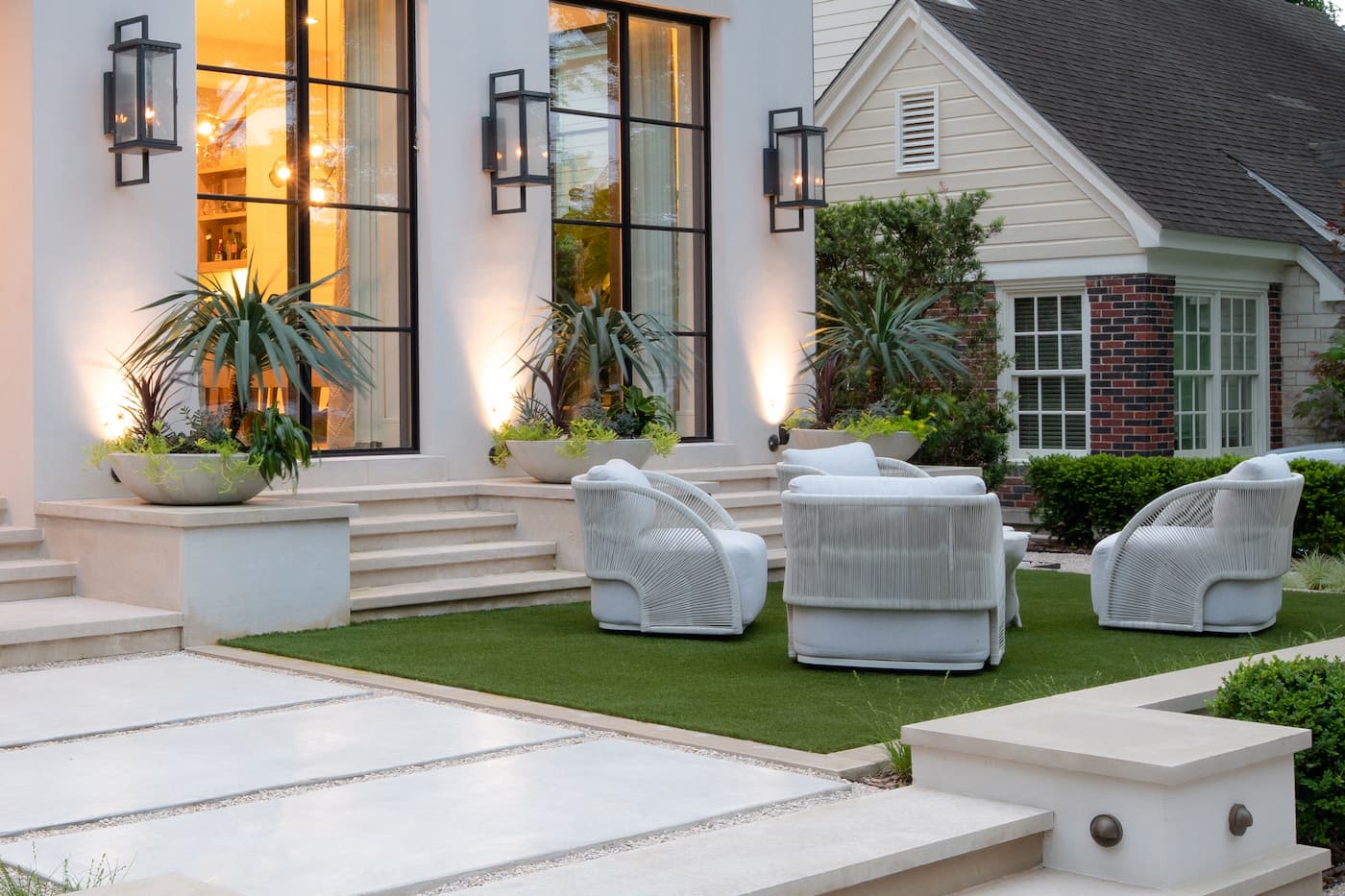
For most high-end DFW residential yards — including University Park, Highland Park, Frisco, Plano, and Westlake — a carefully executed synthetic turf installation integrated with plantings, drainage, and irrigation produces a yard that performs year-round with minimal input. The synthetic turf installation process at Outdoor Concepts is built around that integration, not around the turf product in isolation.
Frequently Asked Questions About Artificial Grass in Dallas
How hot does artificial grass actually get in a Dallas summer?
Surface temperatures on artificial grass in direct summer sun are higher than on natural grass — this is true of every artificial turf product. Peak surface temperatures can reach levels that are uncomfortable on bare feet during the hottest hours of the day, similar to pavers or concrete in the same conditions. The gap narrows significantly in shaded areas and during cooler parts of the day. Infill choice, fiber color, and shade integration within the broader yard plan all affect how much heat a specific installation holds.
Does artificial grass drain properly on Dallas clay soil?
Only with the right installation. Synthetic turf is designed to drain through its backing, but that drainage only works if the base beneath it allows water to move away from the turf area. On DFW clay soil, this typically requires either a drainage system installed before the turf — French drains, channel drains, or a drainage-oriented aggregate base — or a site evaluation that confirms existing drainage paths will handle the load. A turf installation placed directly on unmodified clay soil will often struggle to drain and can develop standing water issues during heavy rain.
How long does high-quality artificial grass last in Texas?
High-quality artificial grass installed correctly on a properly prepared base is designed for well over a decade of residential use under normal Dallas conditions, with most manufacturers backing the product with a long residential warranty. Actual performance depends on product spec, UV exposure, usage patterns, and whether the installation included proper base preparation and drainage. Lower-quality turf or inadequately prepared bases will show wear much sooner — fading, fiber laydown, or uneven surface — regardless of the manufacturer's stated warranty.
Can pets use artificial grass in Dallas yards?
Yes — pet yards are one of the most common residential applications. Artificial grass designed for pet use includes antimicrobial infill and drainage-oriented backing that allows liquids to pass through rather than pool on the surface. Regular rinsing and appropriate infill selection handle odor control effectively in the Dallas climate. Turf product lines marketed for pet use perform differently than standard residential turf, so selection matters for pet-heavy yards.
A synthetic turf installation is not a product purchase. It is a system — graded base, drainage integration, irrigation coordination where relevant, turf product spec, and infill selection, all calibrated to the specific property. When those elements are executed correctly, artificial grass in Dallas holds up through the heat, the clay soil, and the seasonal swings that define this market.
Outdoor Concepts installs synthetic turf across the Dallas area, including University Park, Highland Park, Frisco, Plano, Westlake, and the broader DFW region. You can browse completed work in our project gallery or review the full range of services on our services page.
When you're ready to talk through a synthetic turf installation for your Dallas property, request a consultation or call (214) 945-2920.
Similar Topic